Bio-architecture is an ongoing line of research, developed through art installations, that reflects on the relationship between human beings and the natural environment.
It began as a form of aesthetic and symbolic disruption within the urban environment — introducing living, grown matter where the city least expects it. Over time the gaze shifted away from the city and into the natural environment itself, toward spaces conceived to dialogue with the forms of life that already inhabit it.
From there the research embraces several intertwined intentions: to generate habitable, protective spaces for certain species of animals and plants; to draw on the constructive techniques of other species; to seek a return to human dwelling through ways of building rooted in the very growth of plants; and to make installations that also give way to nature, opening the ground for it to reclaim its own space. Between land art and architecture, these pieces are grown and assembled on site and colonised by their surroundings — an architecture that does not impose on the landscape but makes room for it to return.
Structures grown from the landscape
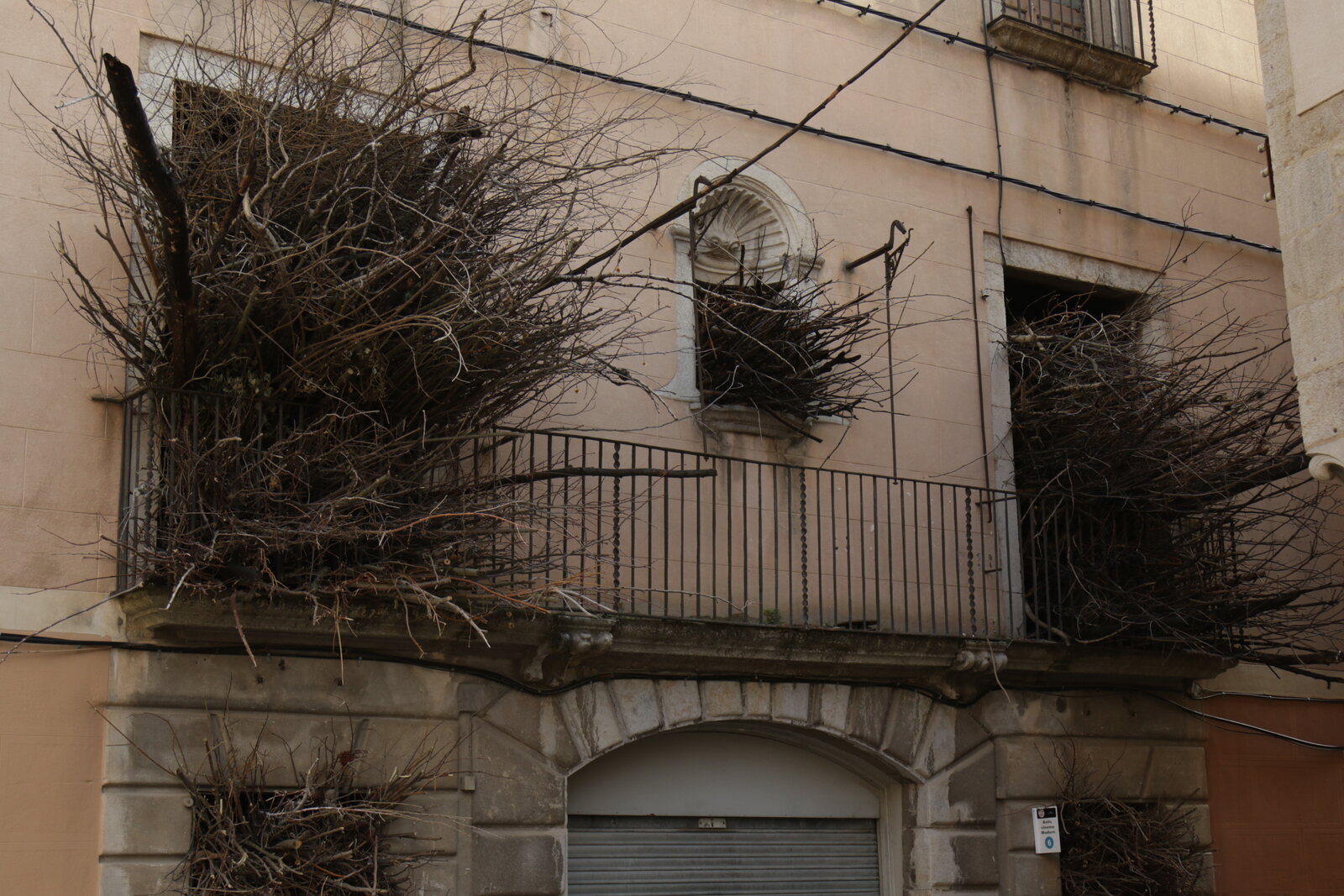
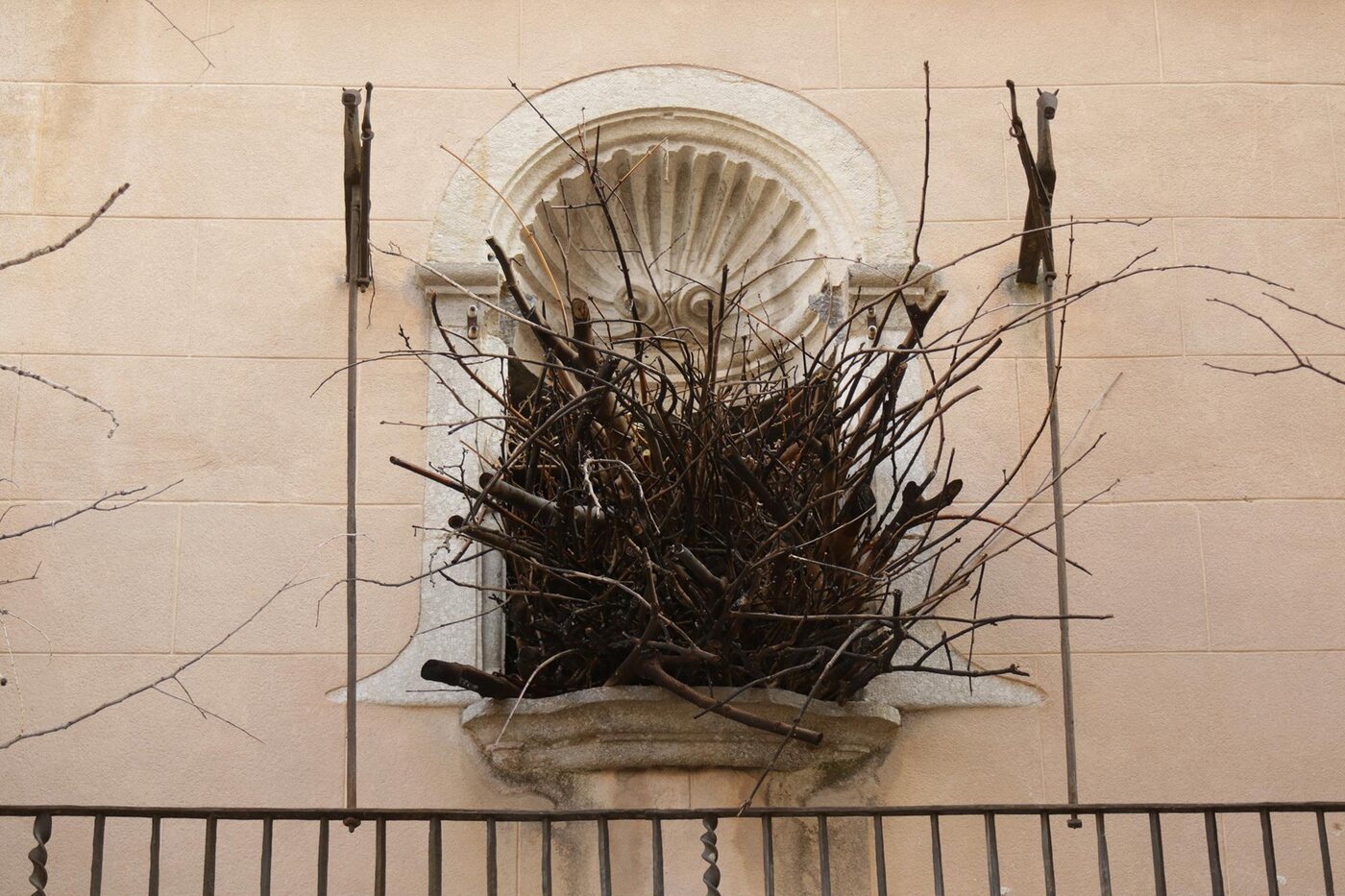
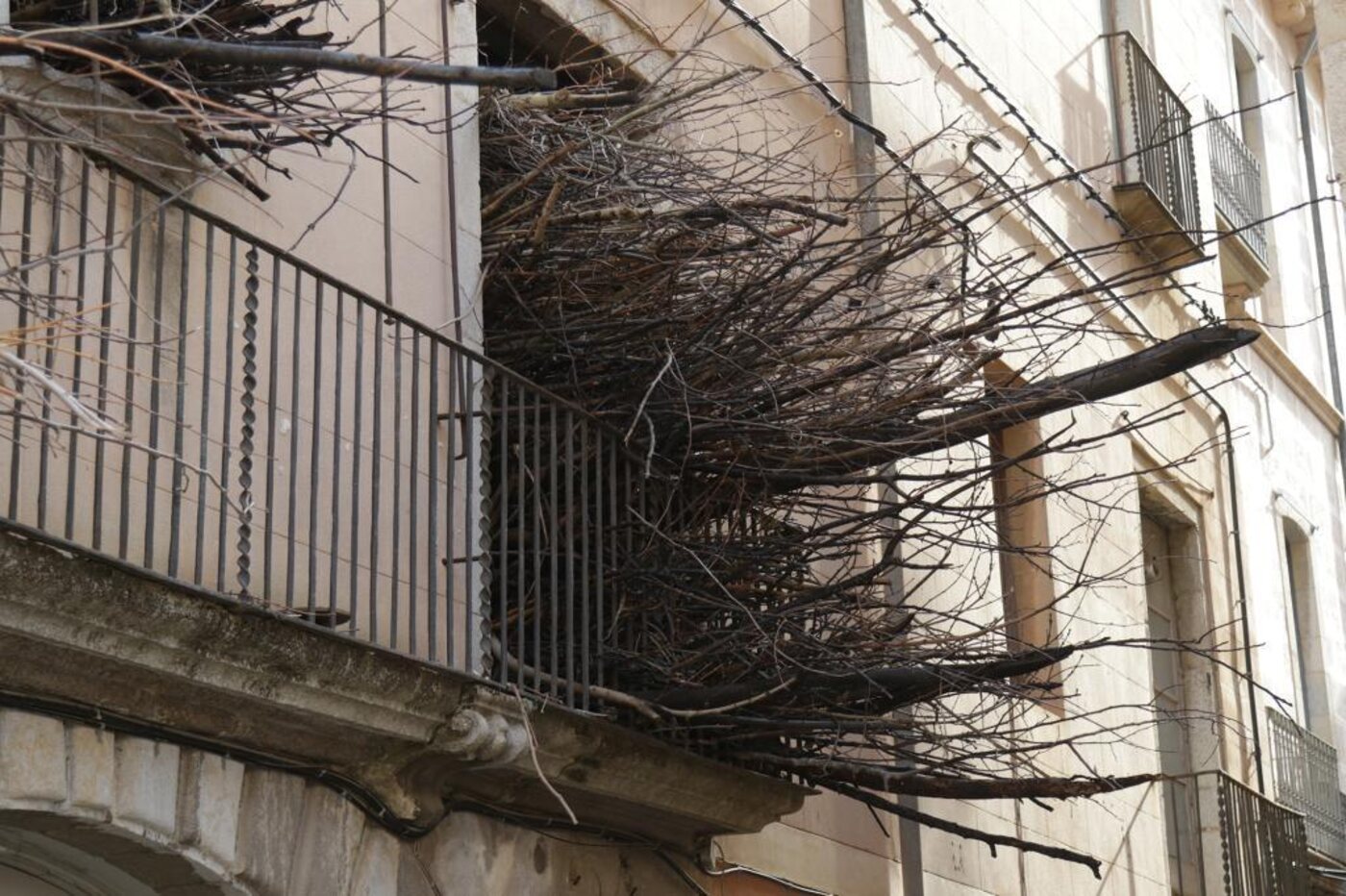
Reinterpretation of a Fireplace · 2016
One of the earliest bio-architecture gestures, made inside a former cinema that had suffered a fire — its interior burnt out and left in ruins. Rather than a nest, the intervention stages the fireplace as the burning heart of the home: an invitation to set the whole house alight. Fallen tree trunks were carried from the forest to the site, so that the organic matter of the woodland could symbolically become the fuel feeding the flames of a building in the centre of the city. Set against the modernist architecture, the raw timber opened a dialogue of contrasts — branches that, breaking the urban order, could almost be read as bouquets of flowers.
Nest · 2018
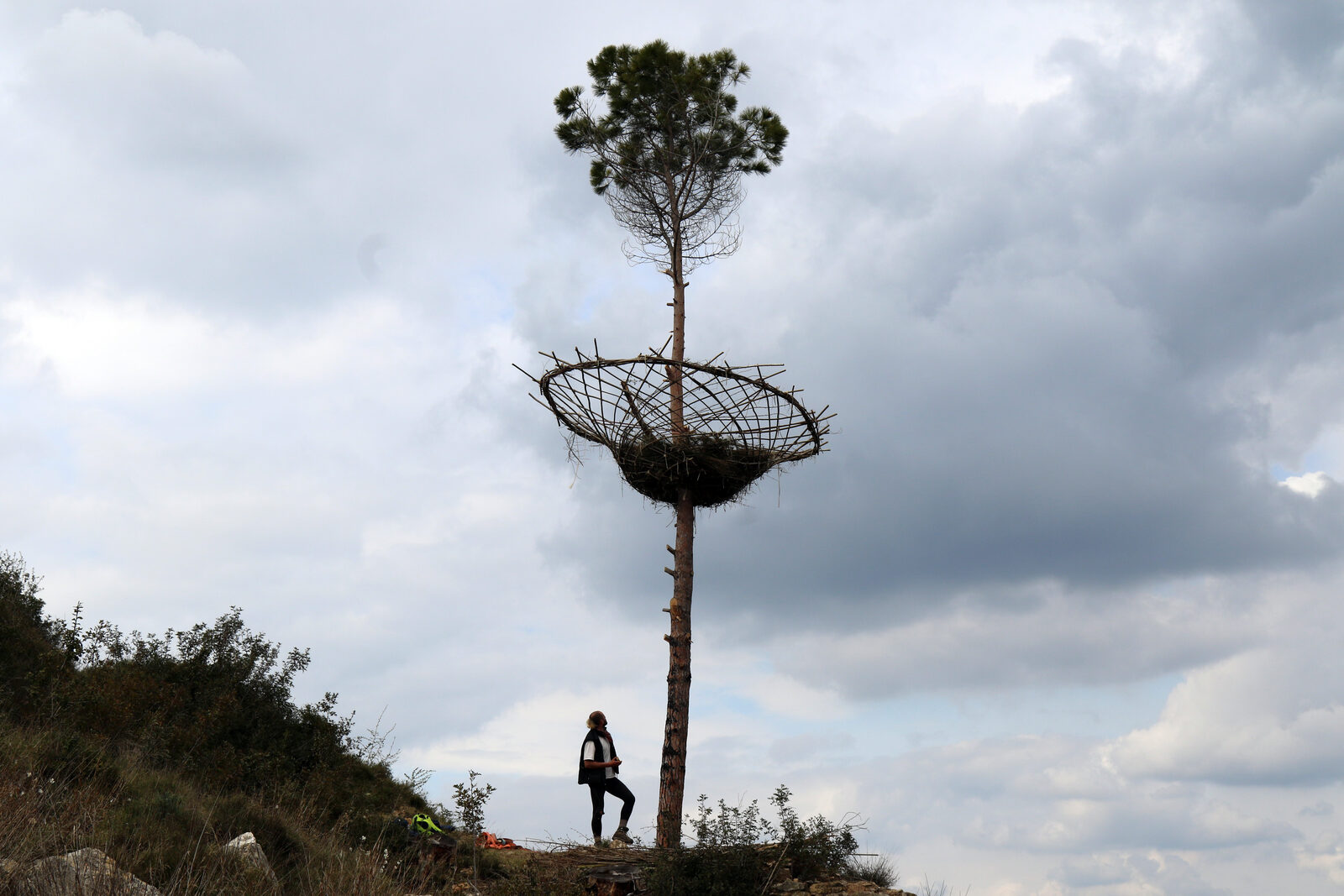
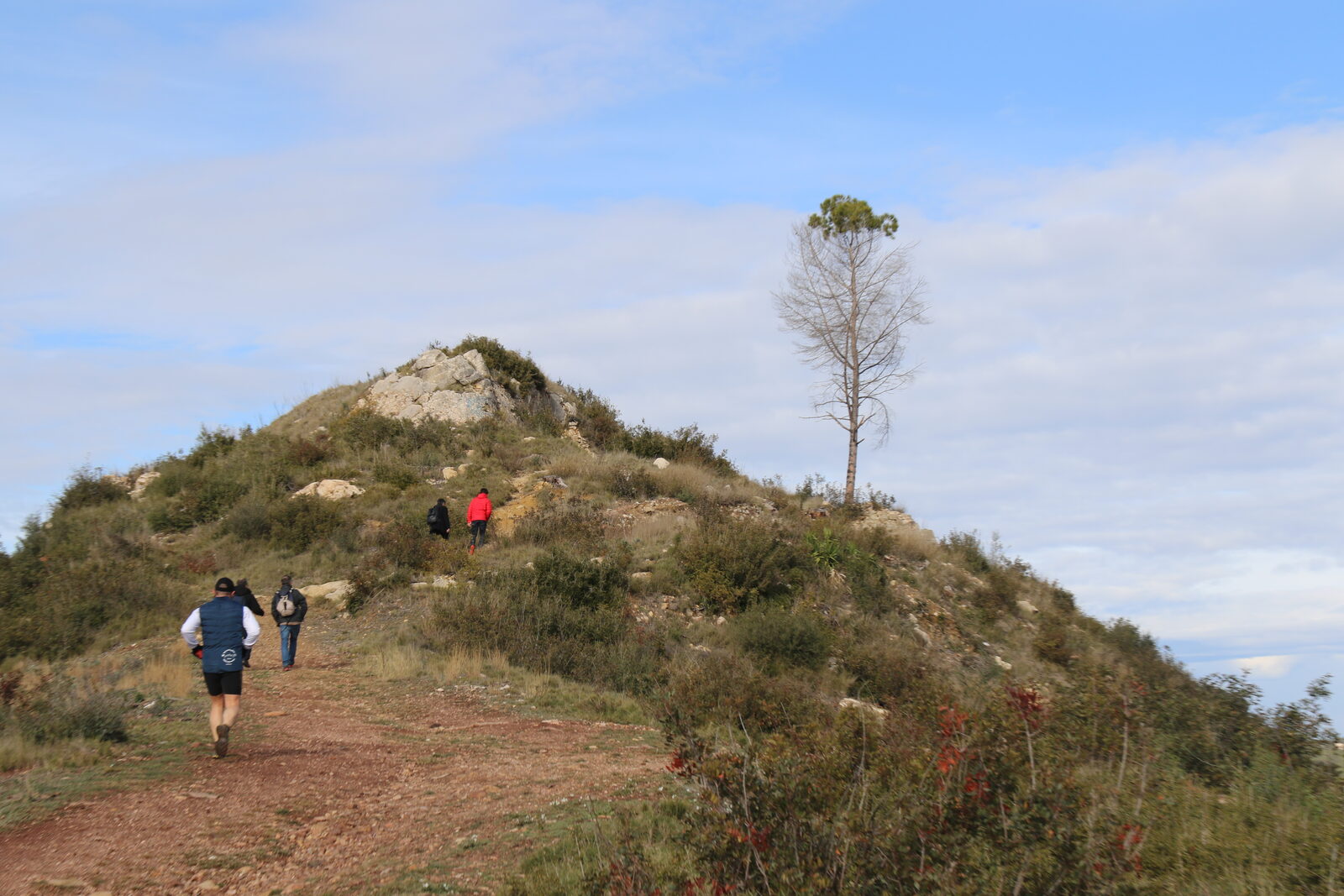
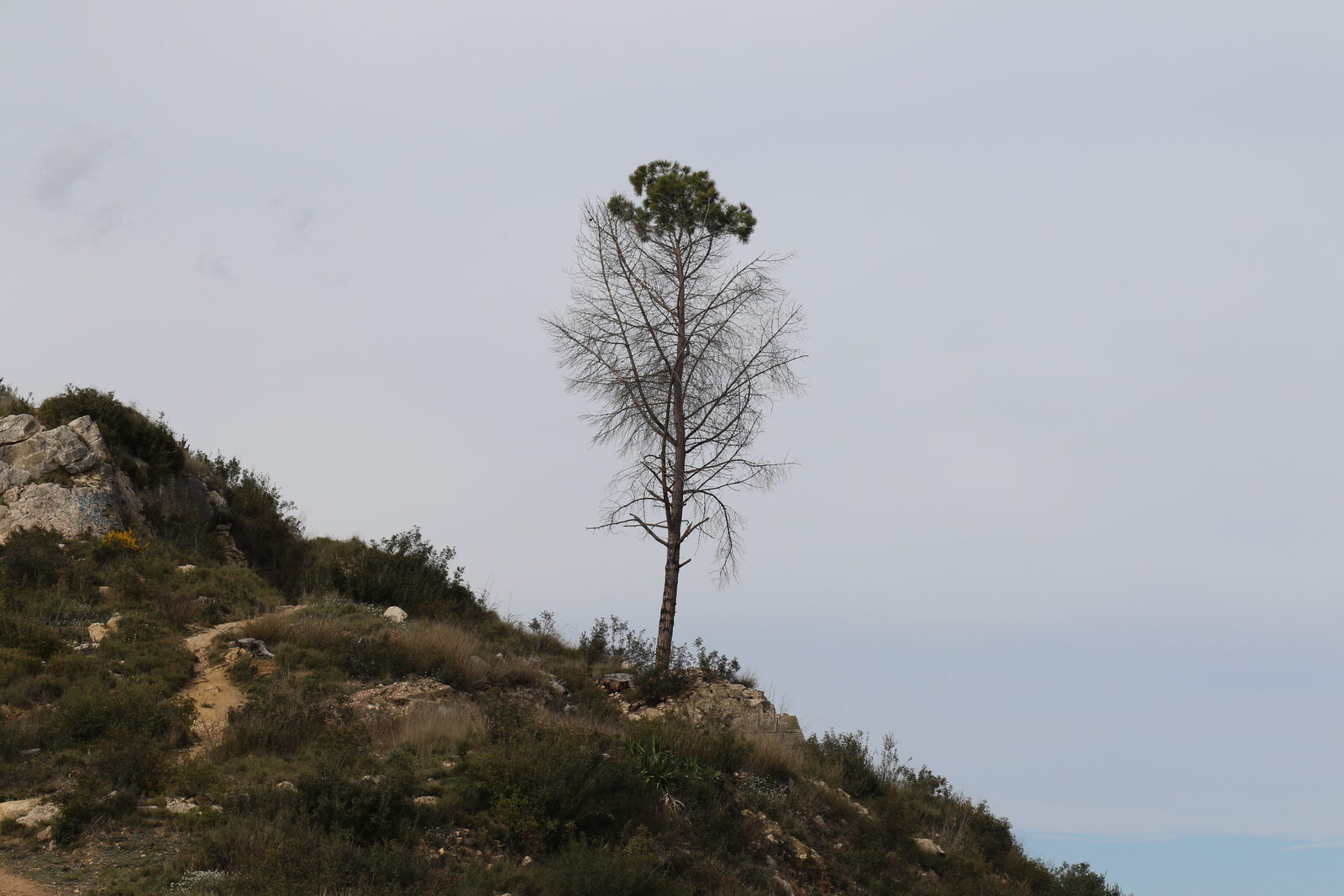
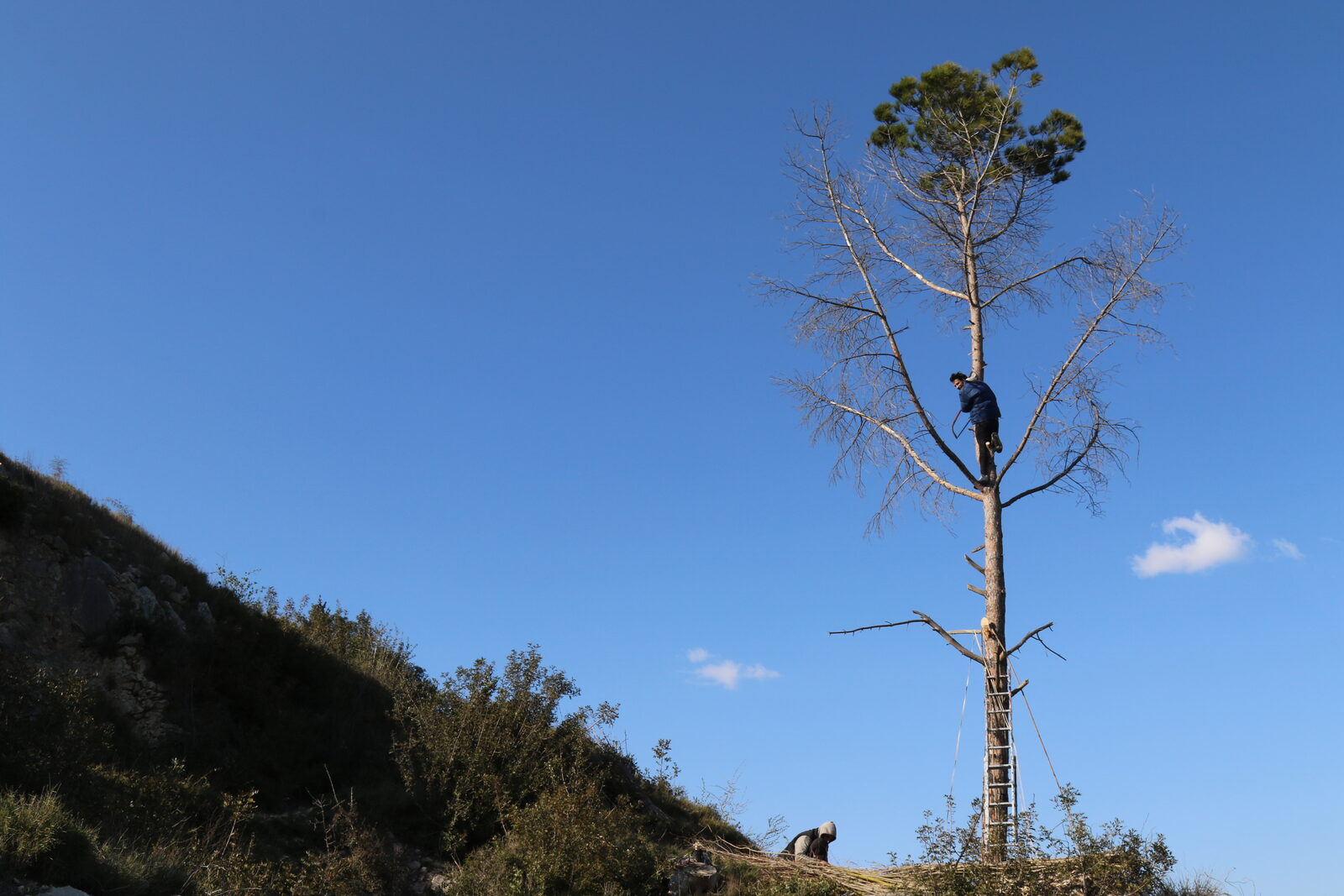
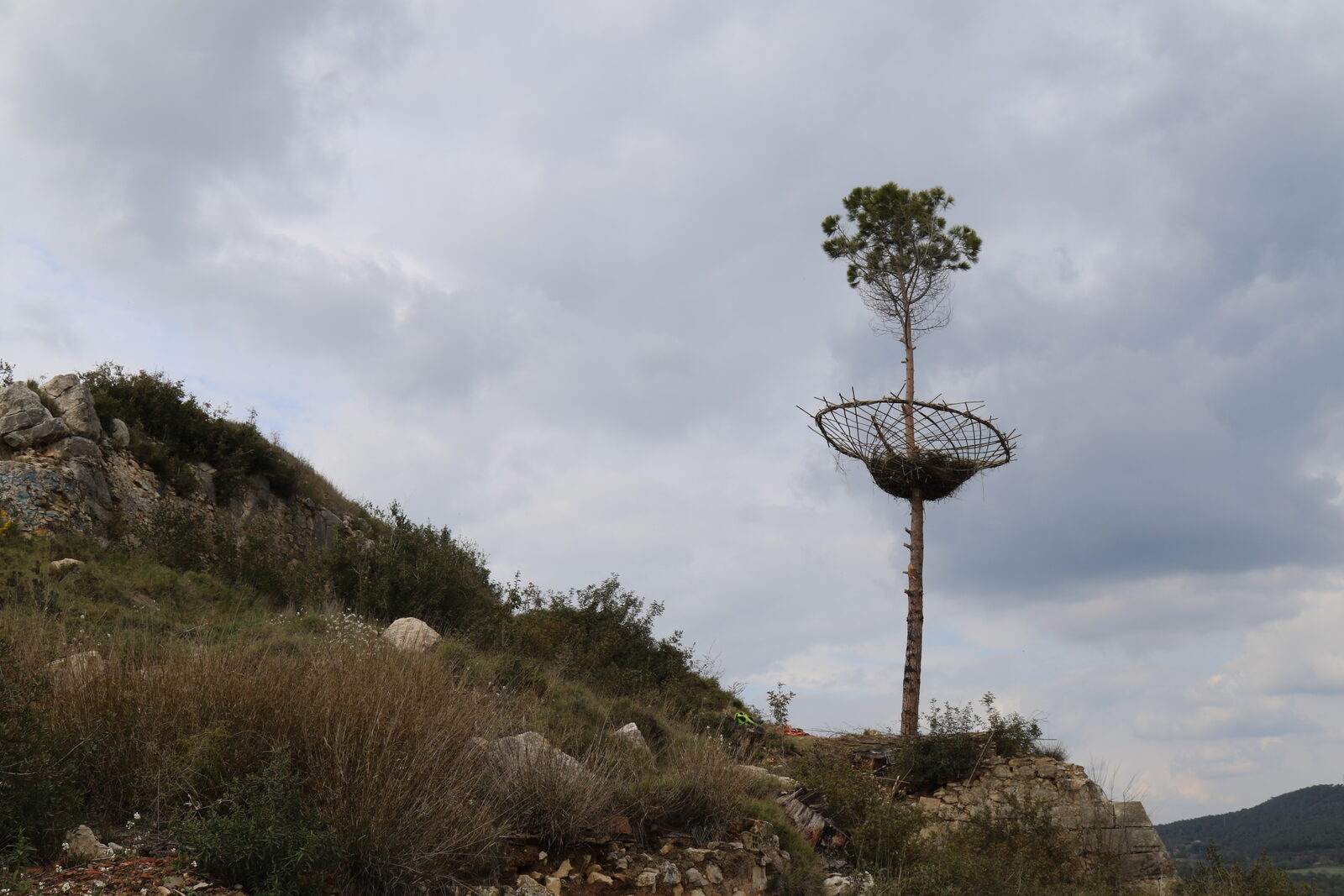
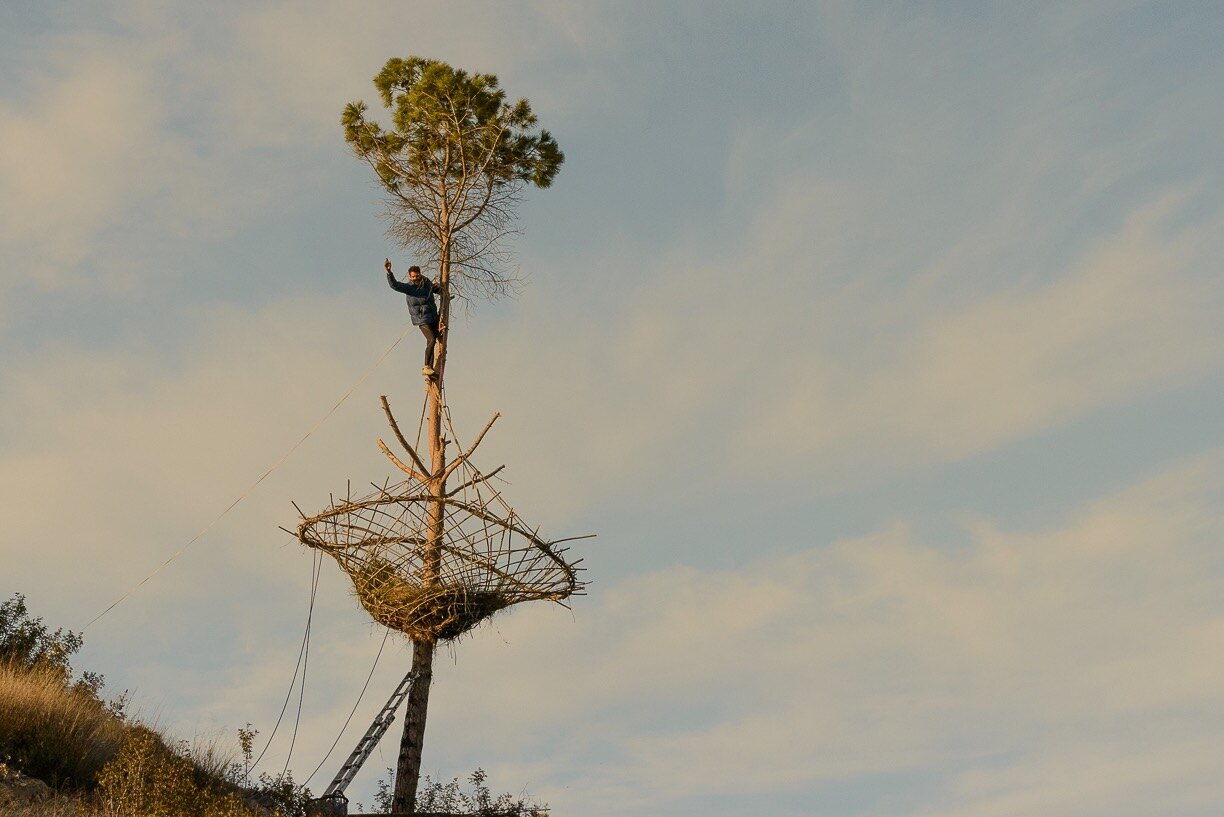
On a hill in Les Gavarres, near Girona, a wildfire had destroyed every tree. On the mound a single burnt pine survived — still alive, still holding its green crown high above the charred ground. Invited to intervene along a land-art itinerary through the area, we chose to work with that survivor of the fire.
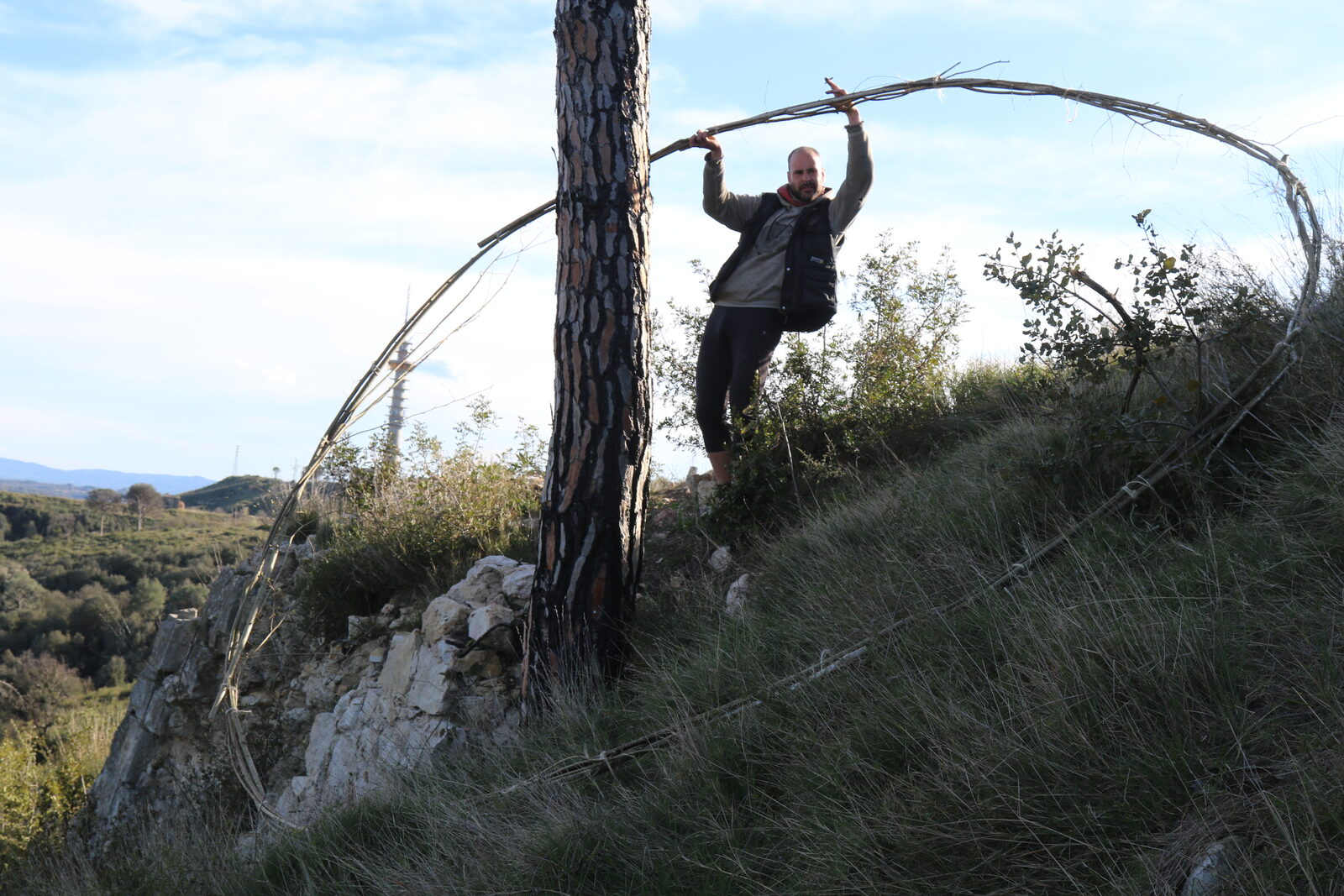
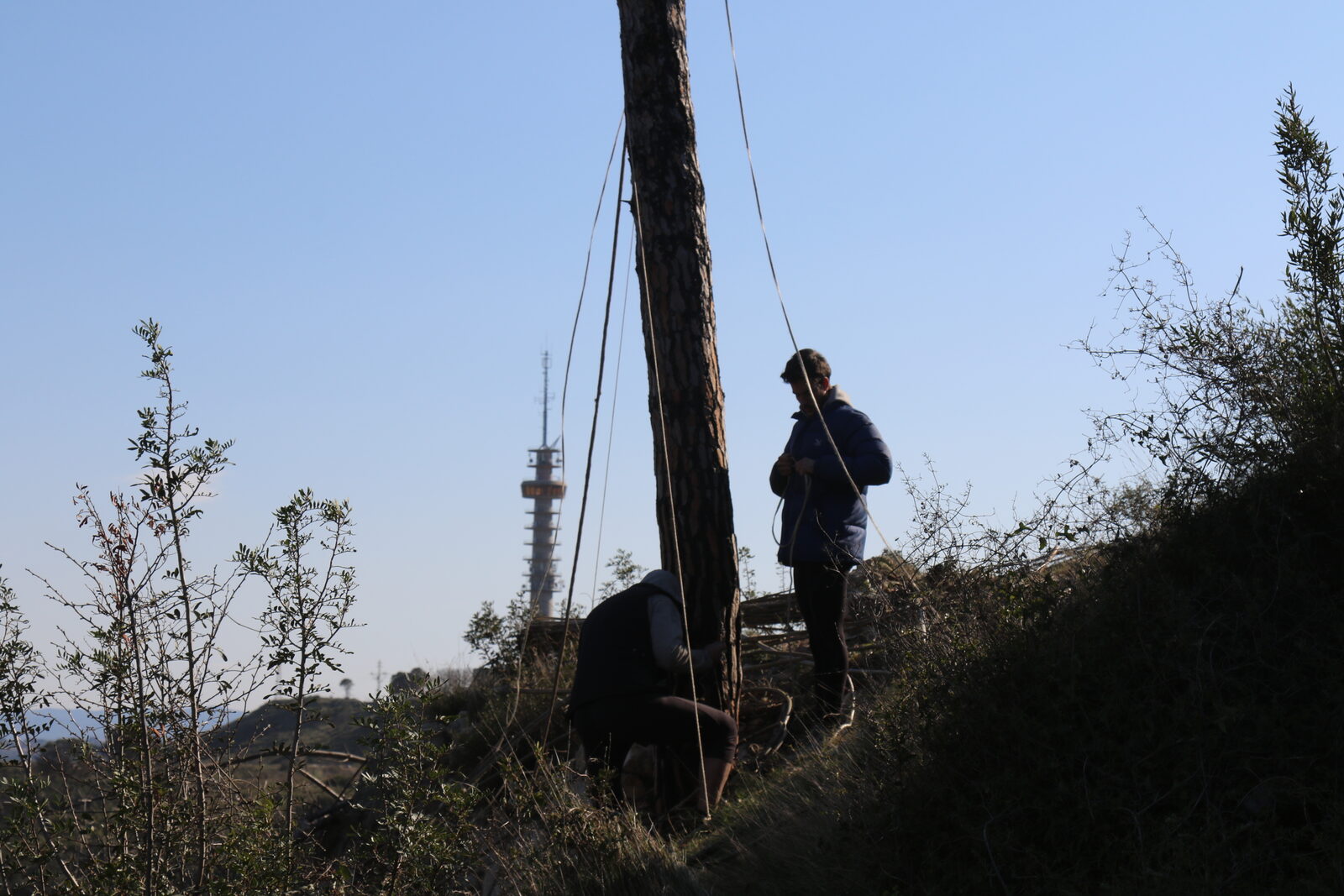
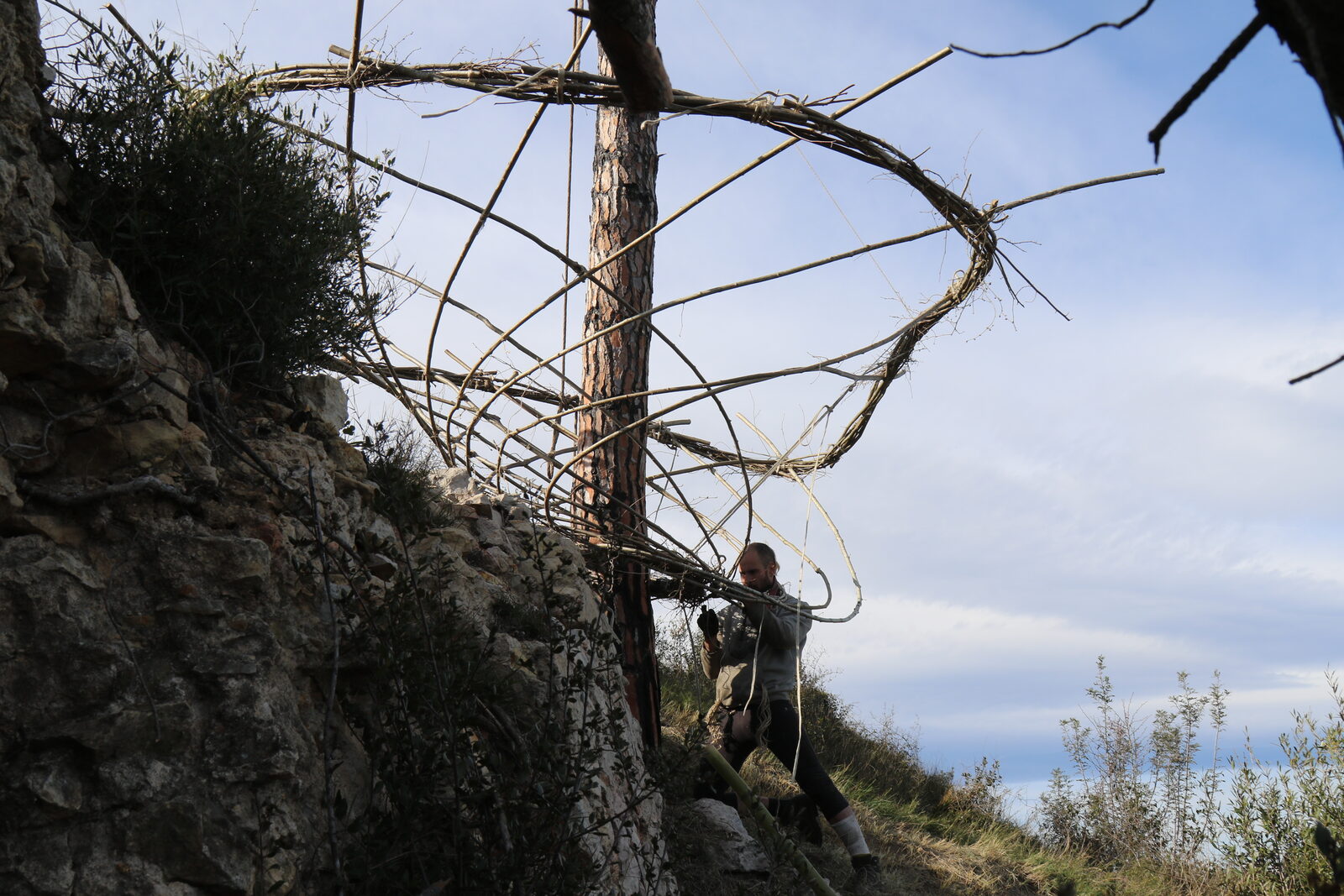
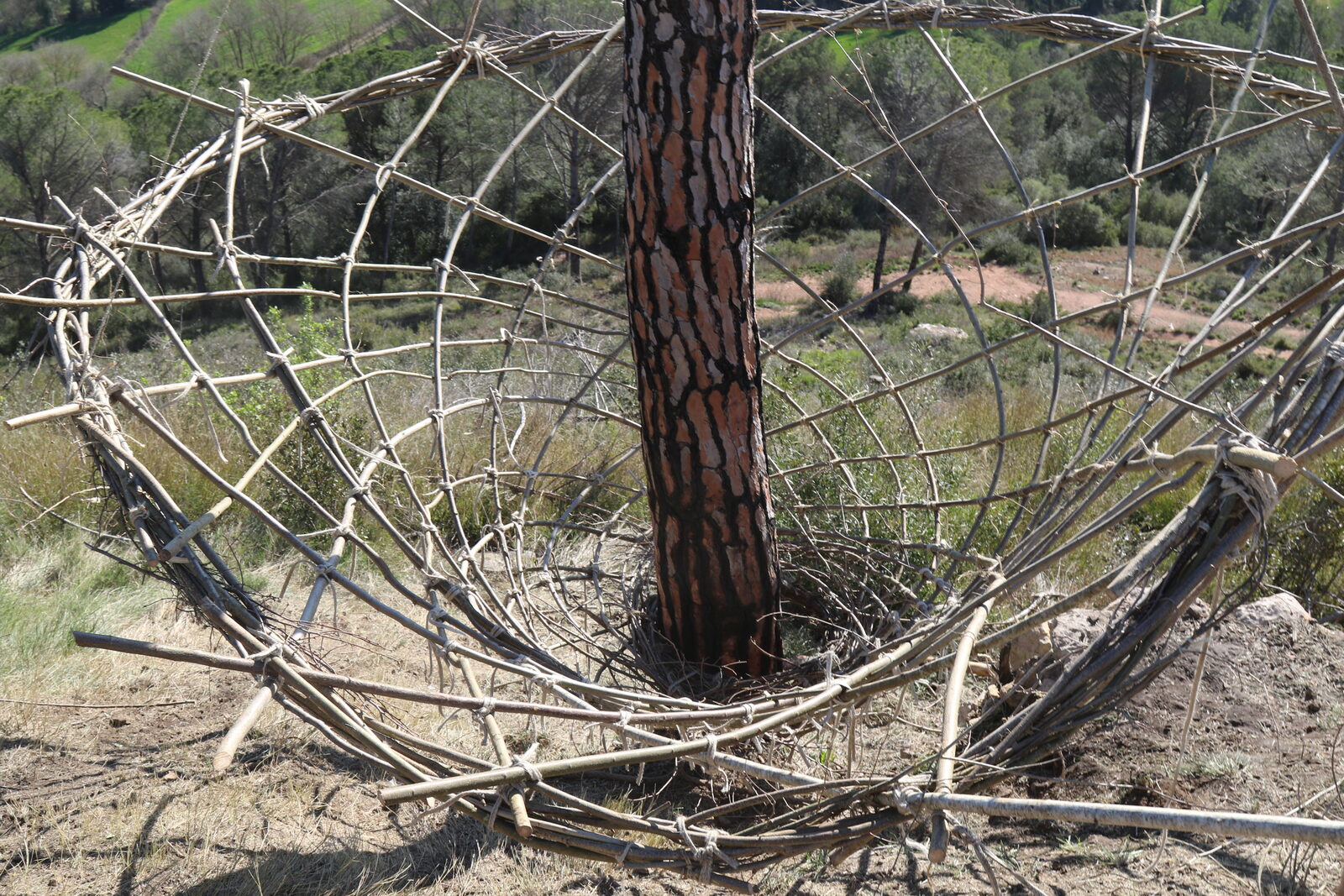
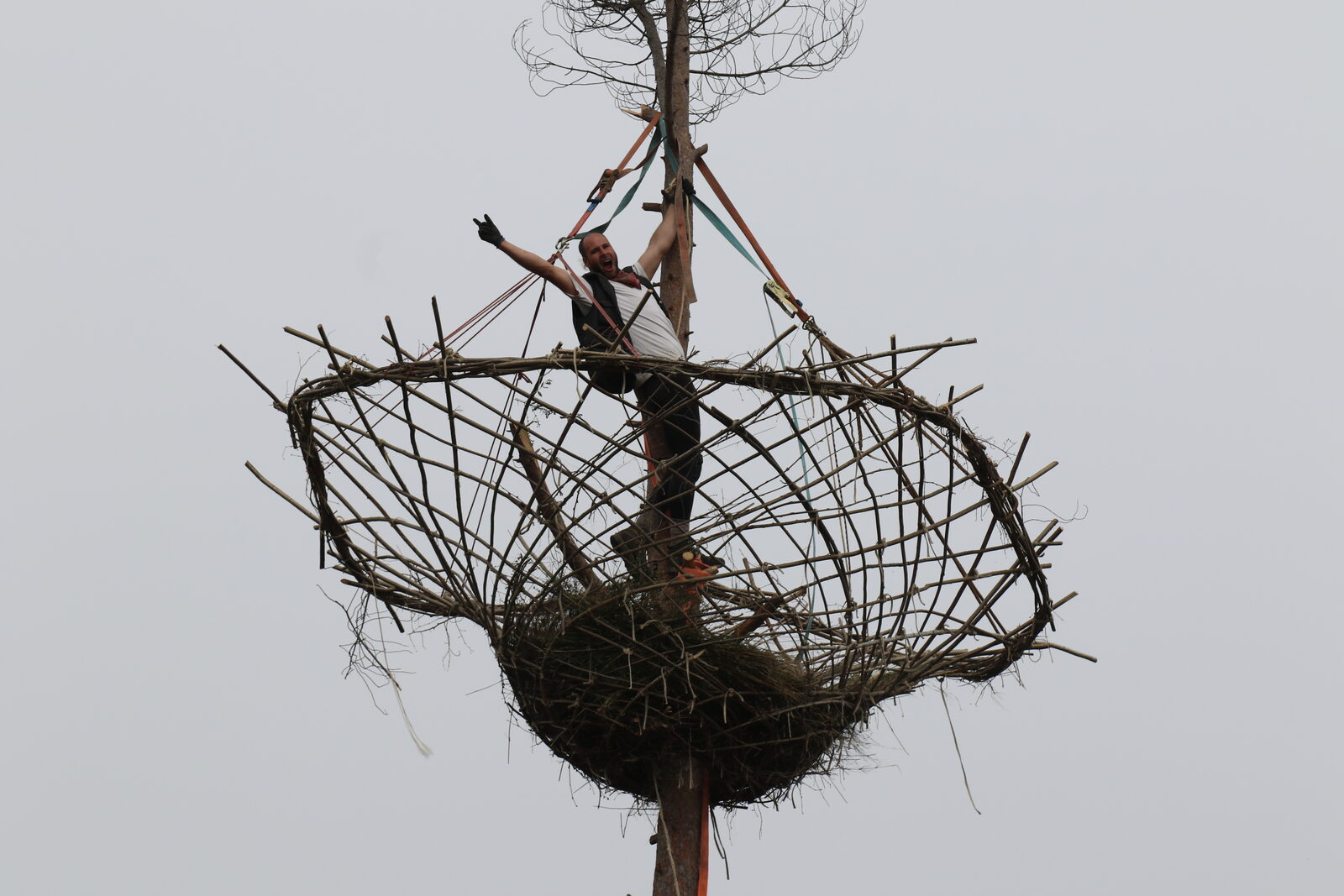
Around its trunk we built a giant nest of woven vegetable latticework, made to catch whatever the tree let fall — needles, leaves and organic debris — suspended between its scorched base and its living canopy. Grown rather than built, the nest holds the fragility of the home and of shelter itself: something inhabited by the landscape as much as by us, gathering the slow remains of a tree that refused to die.
Power Tower I · 2020
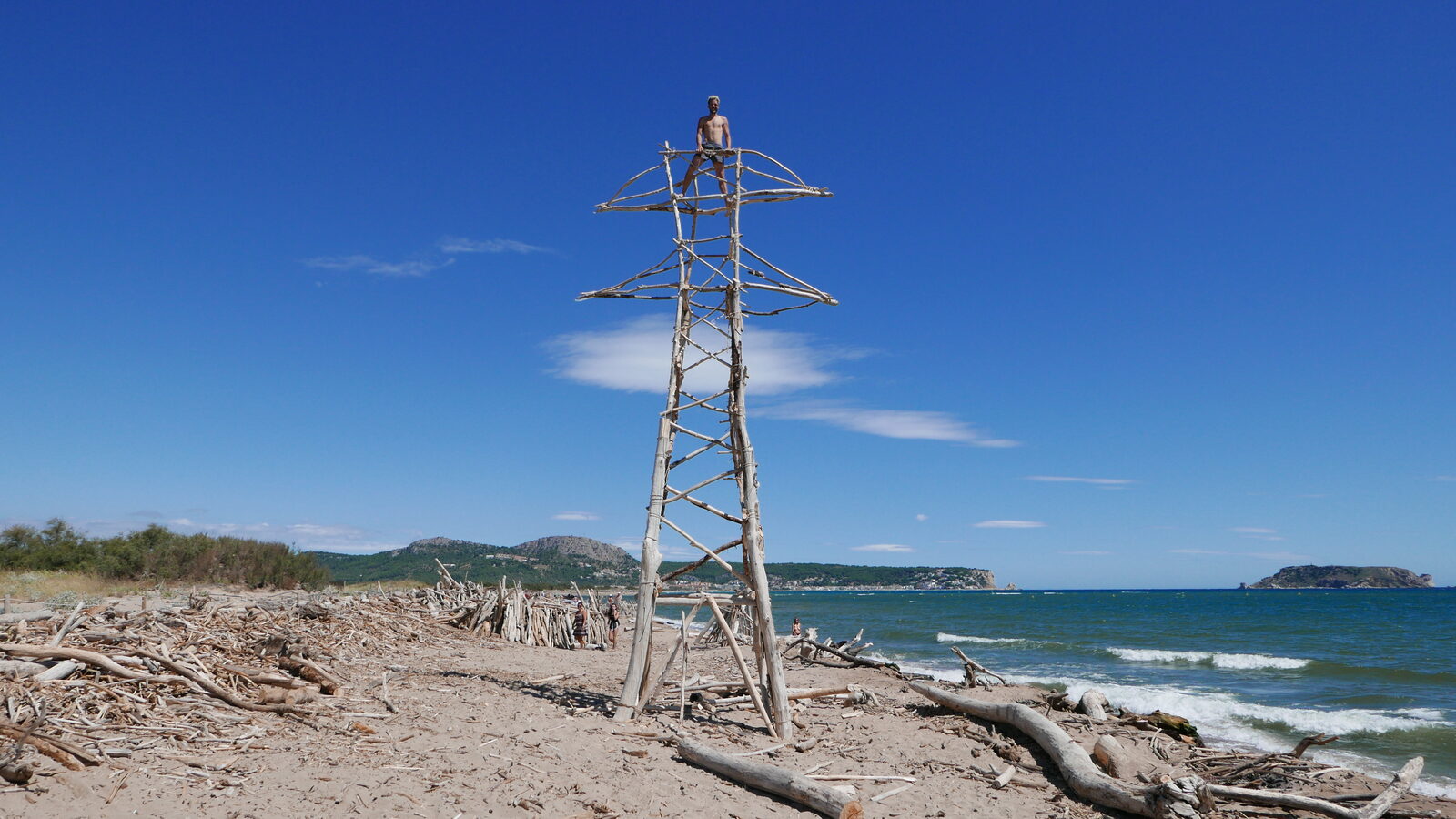
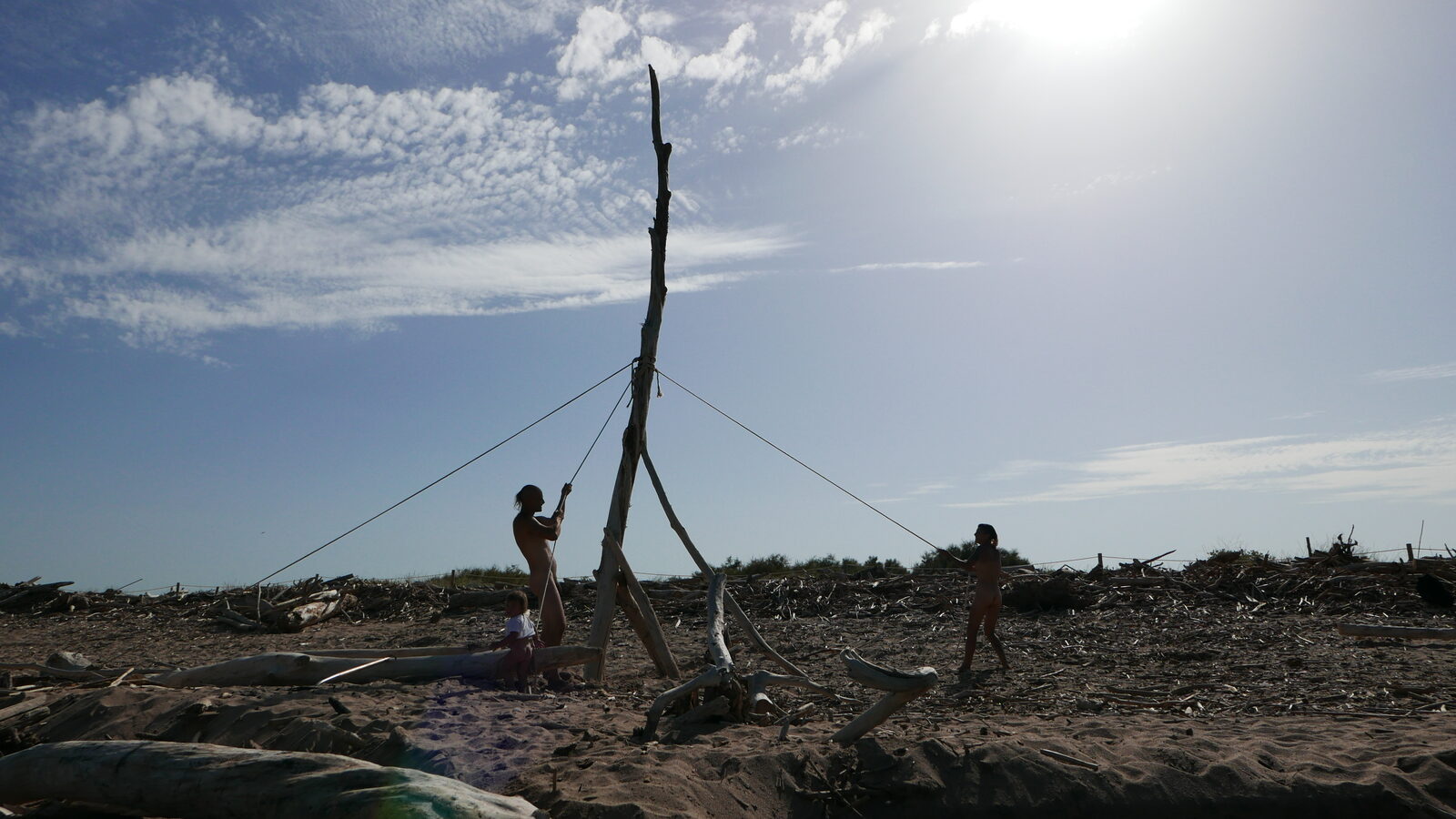
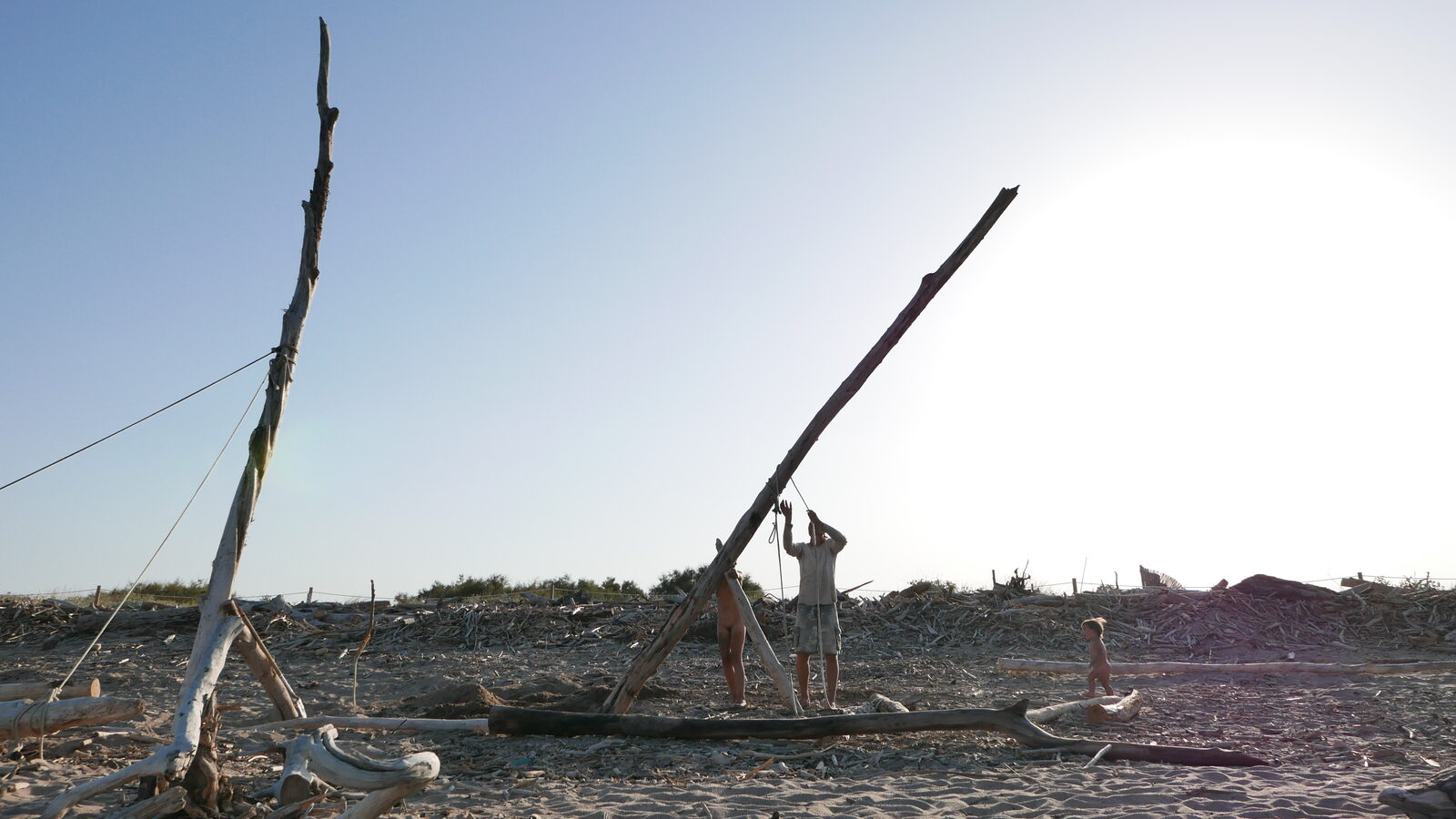
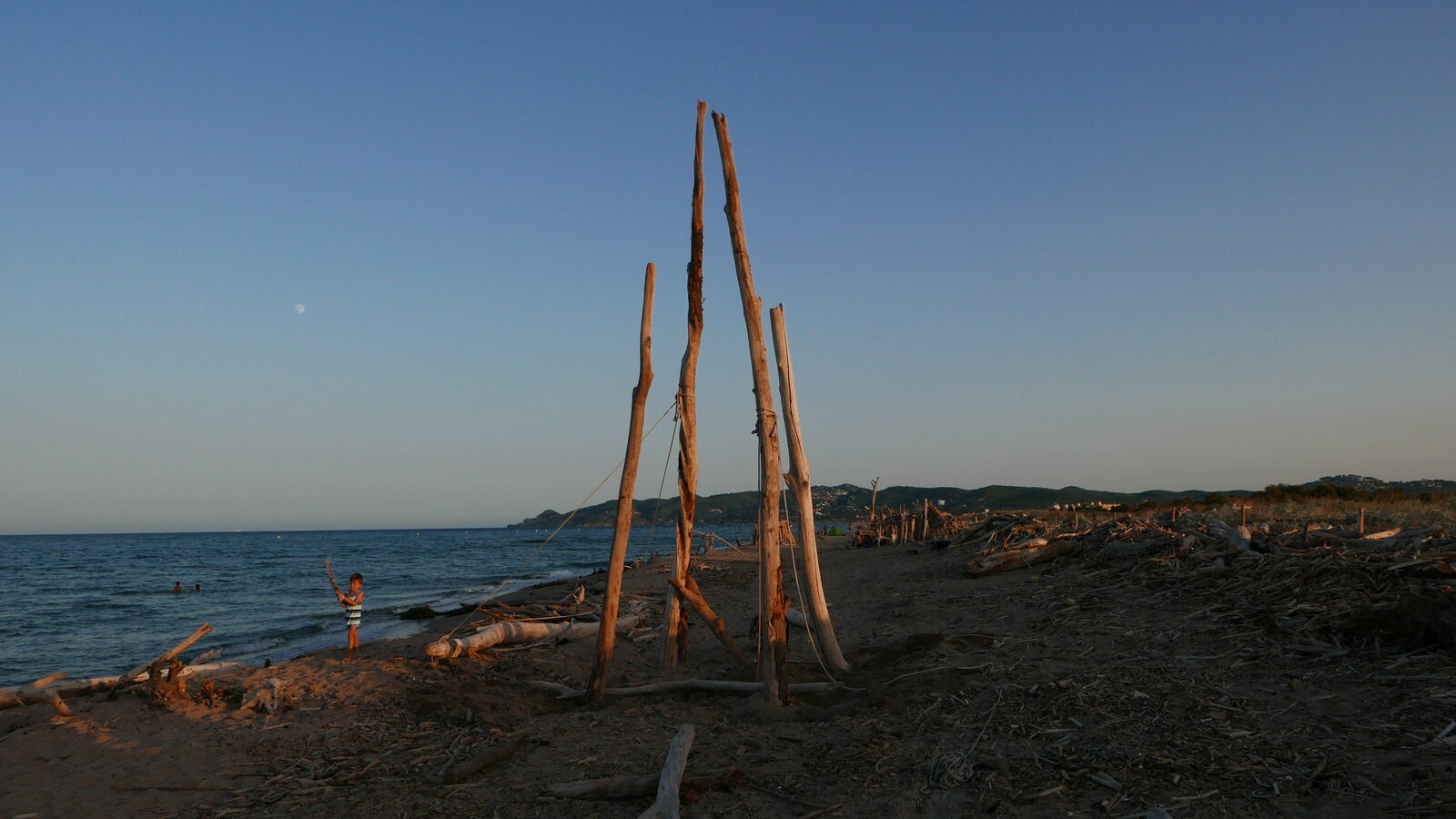
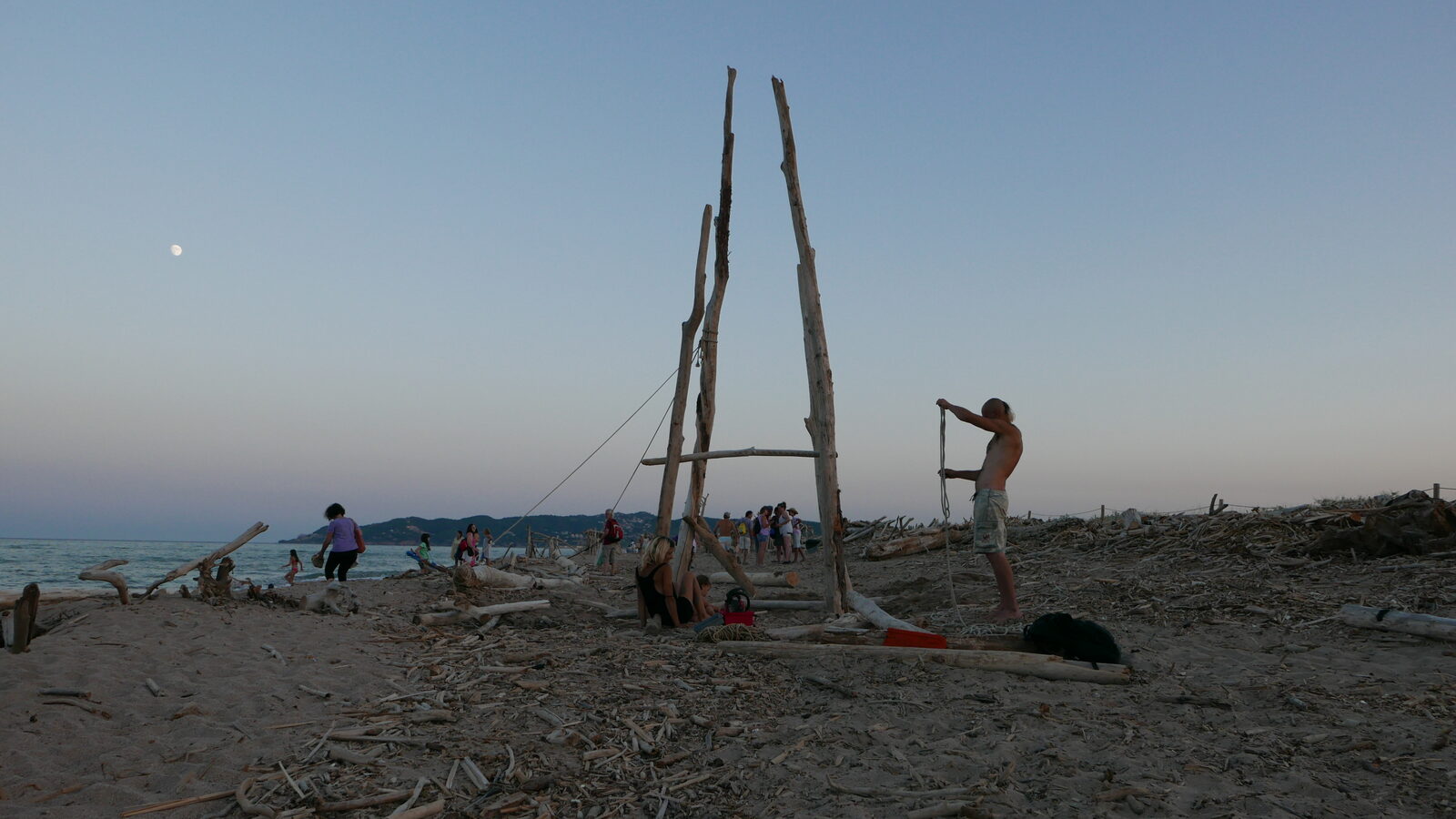
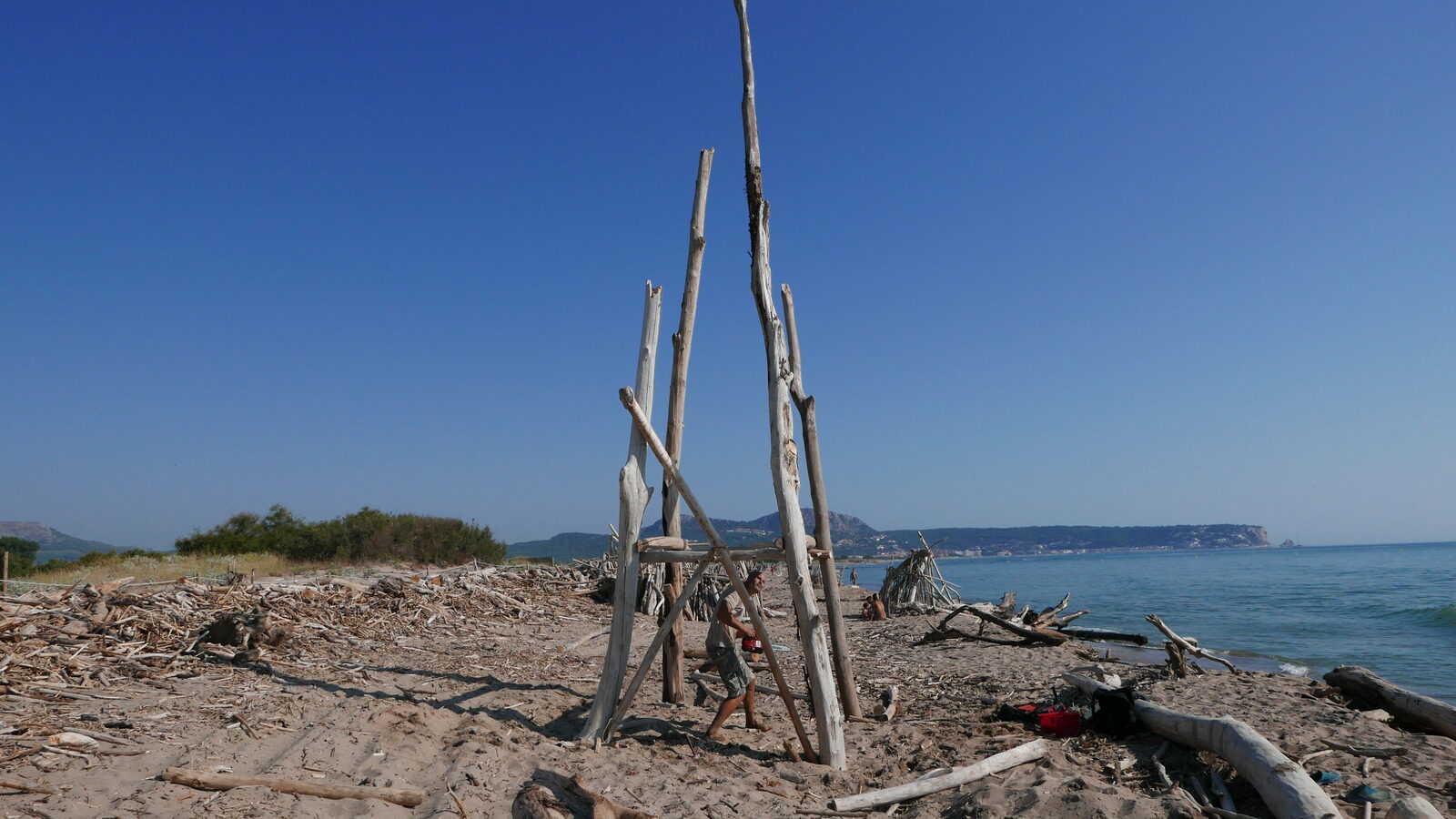
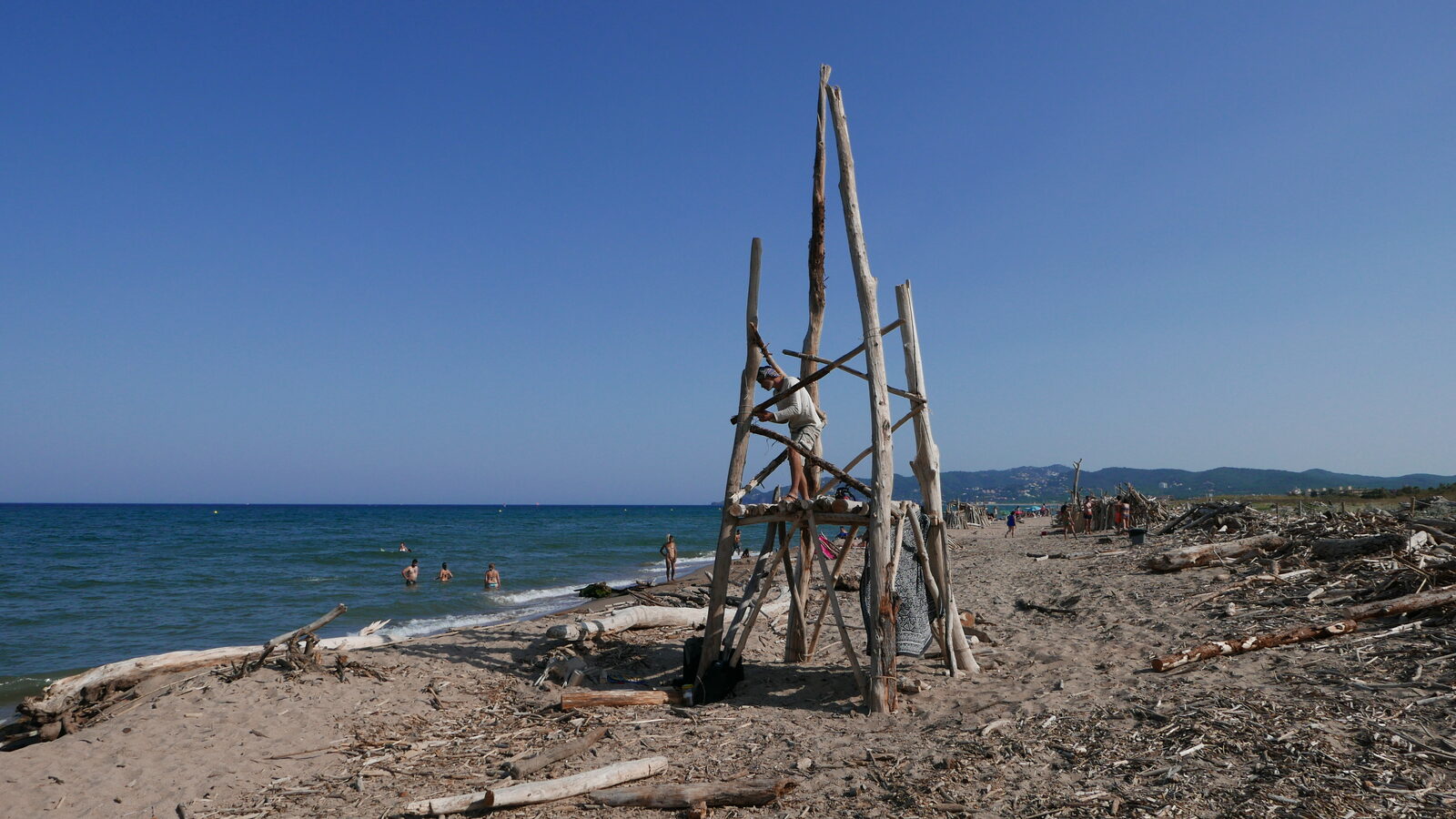
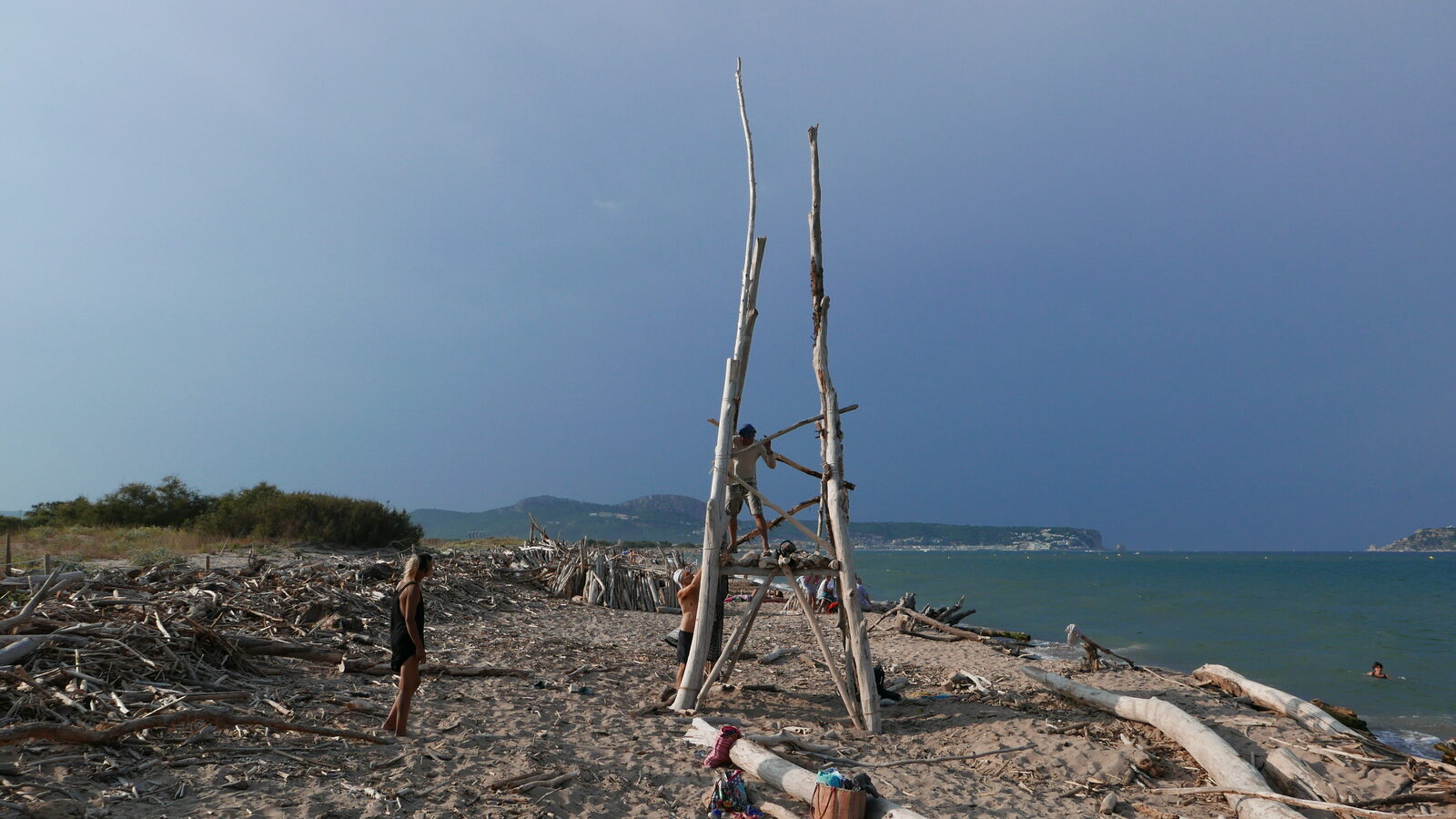
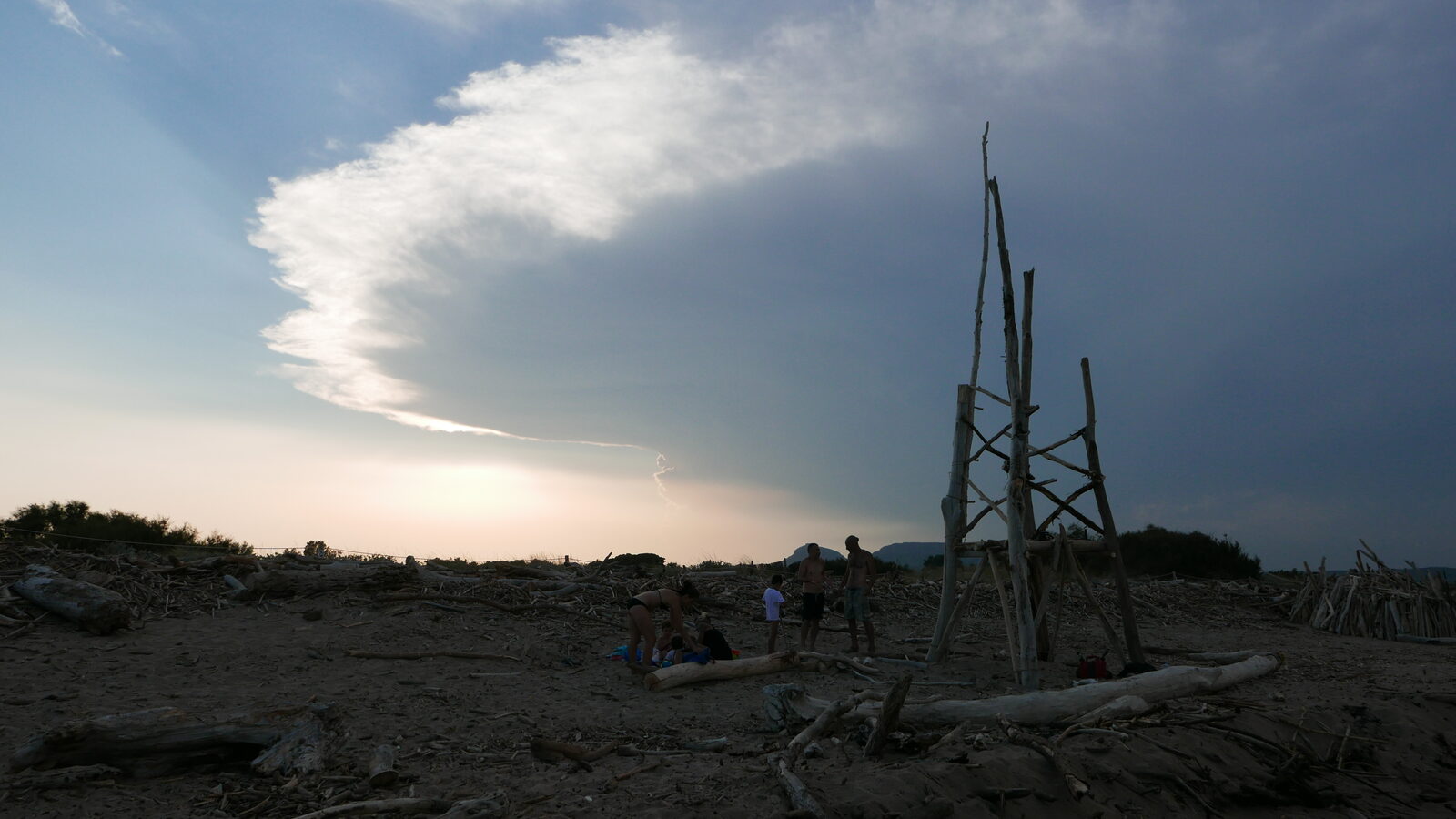
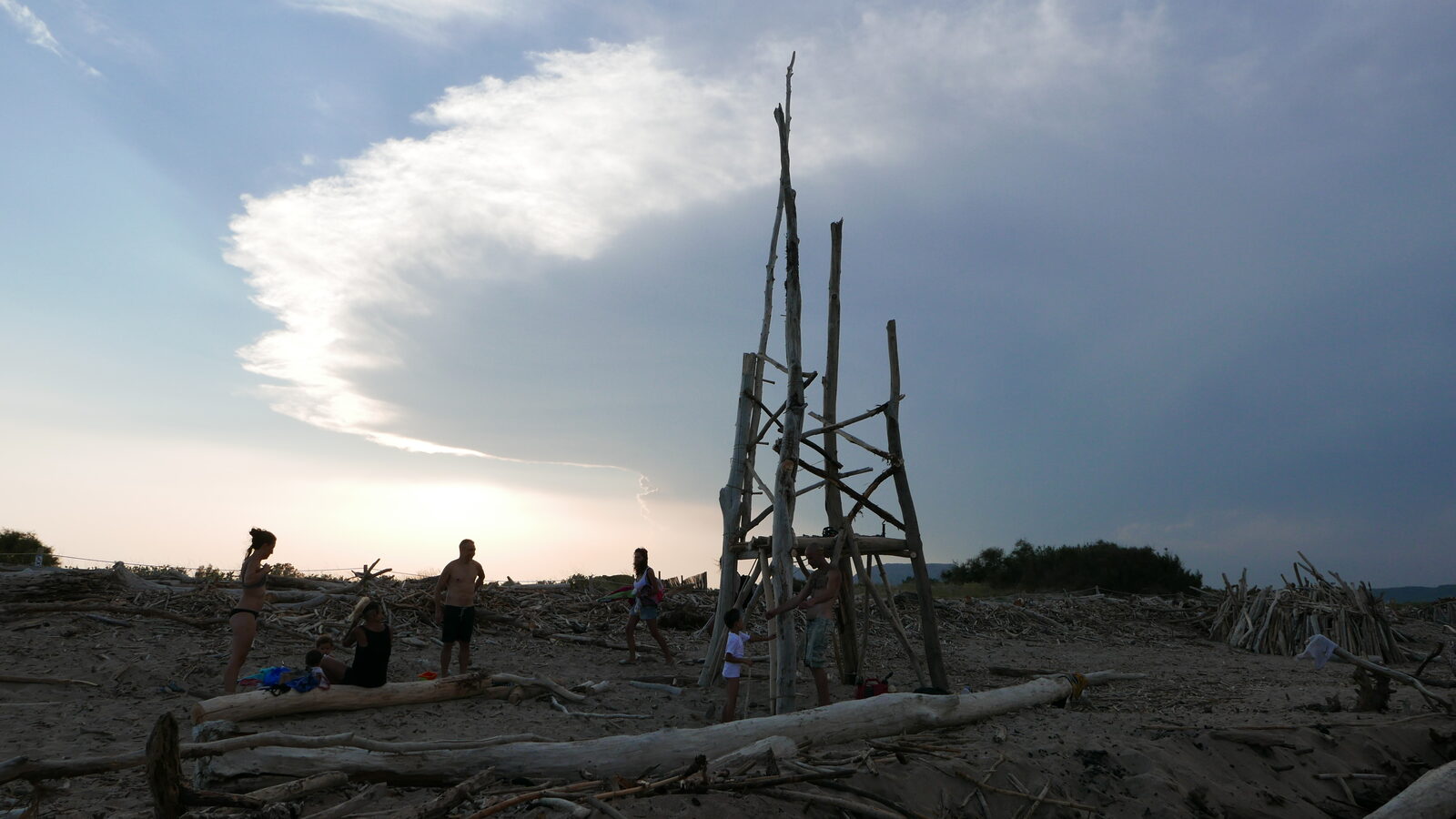
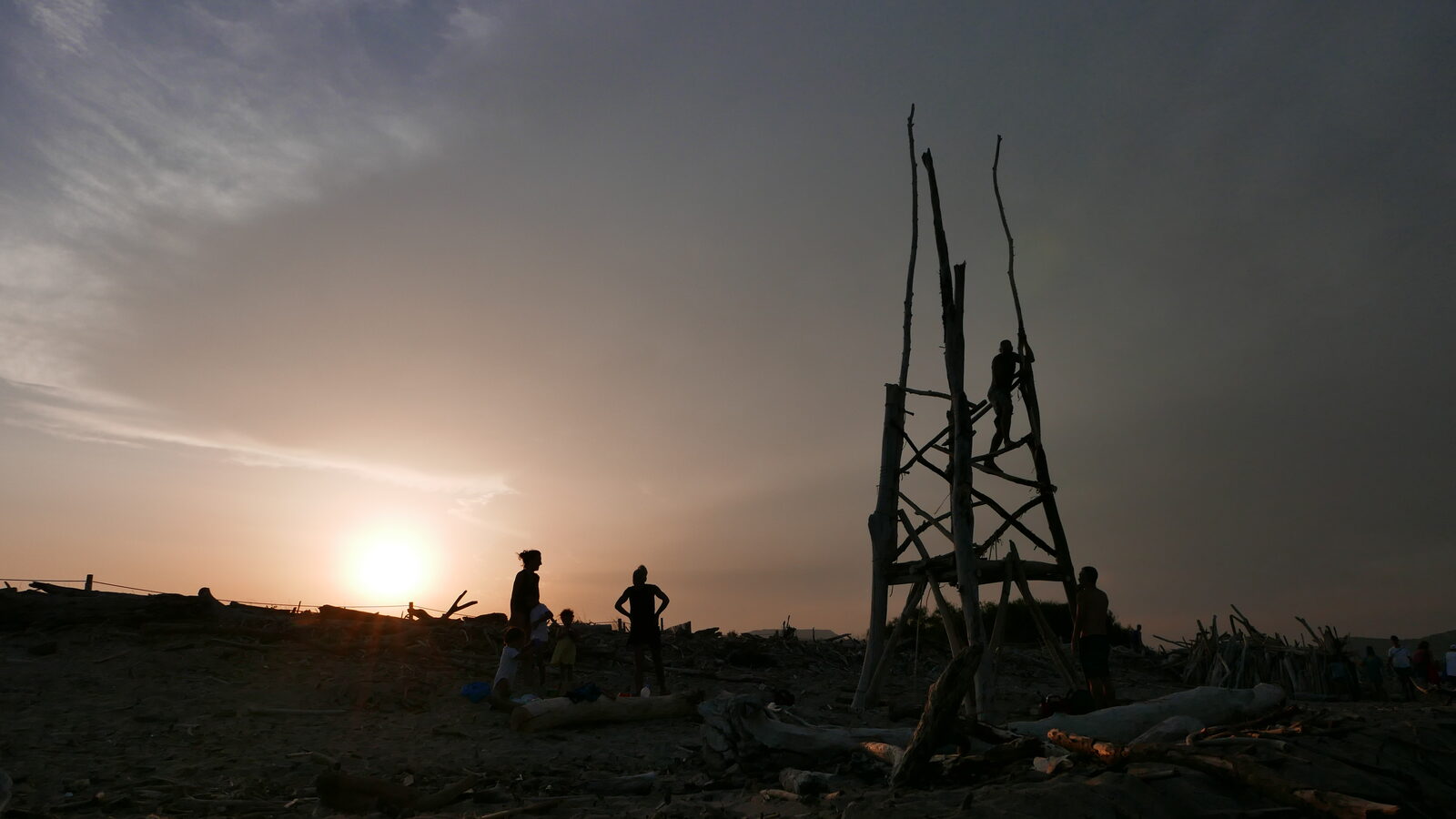
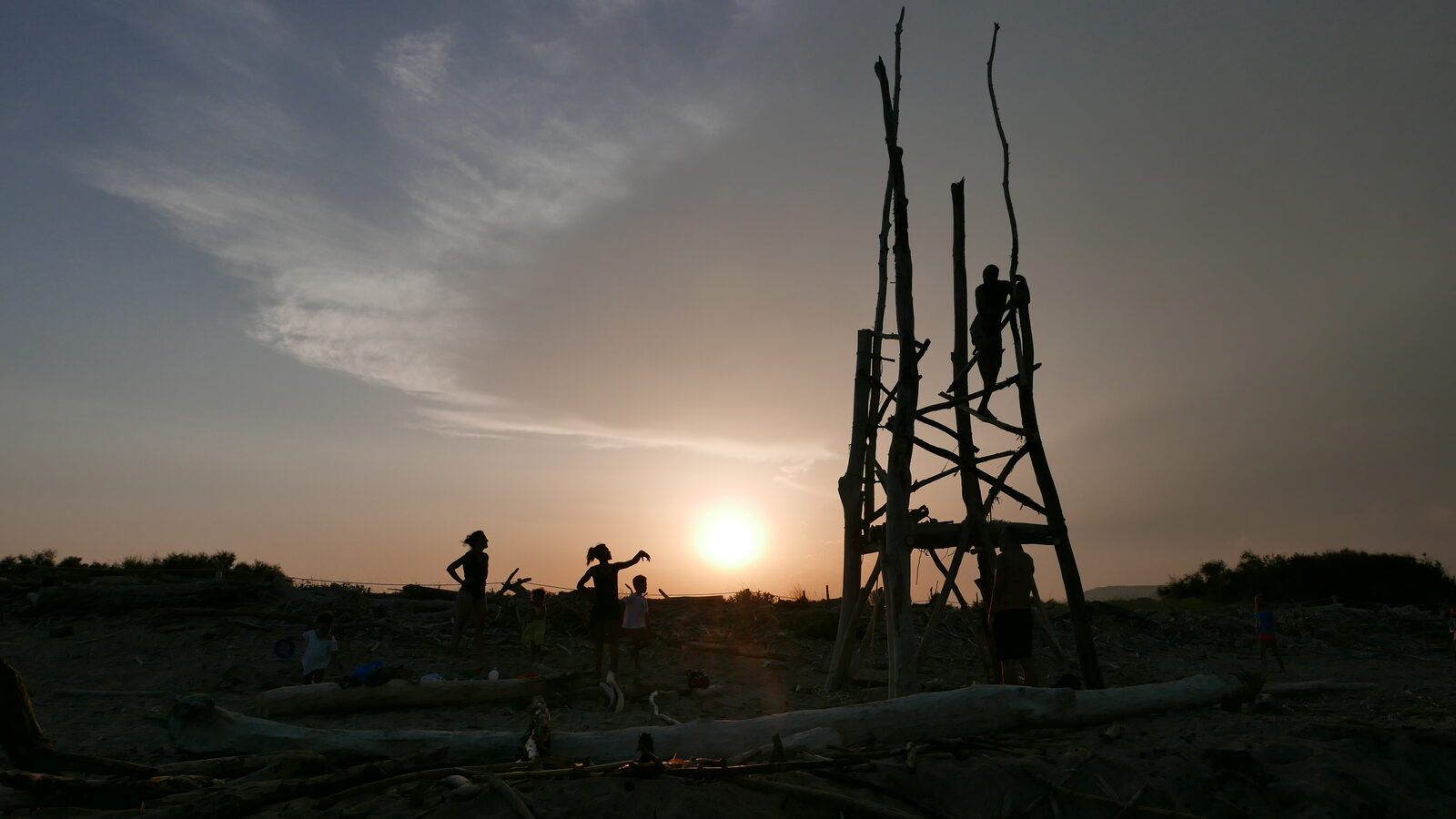
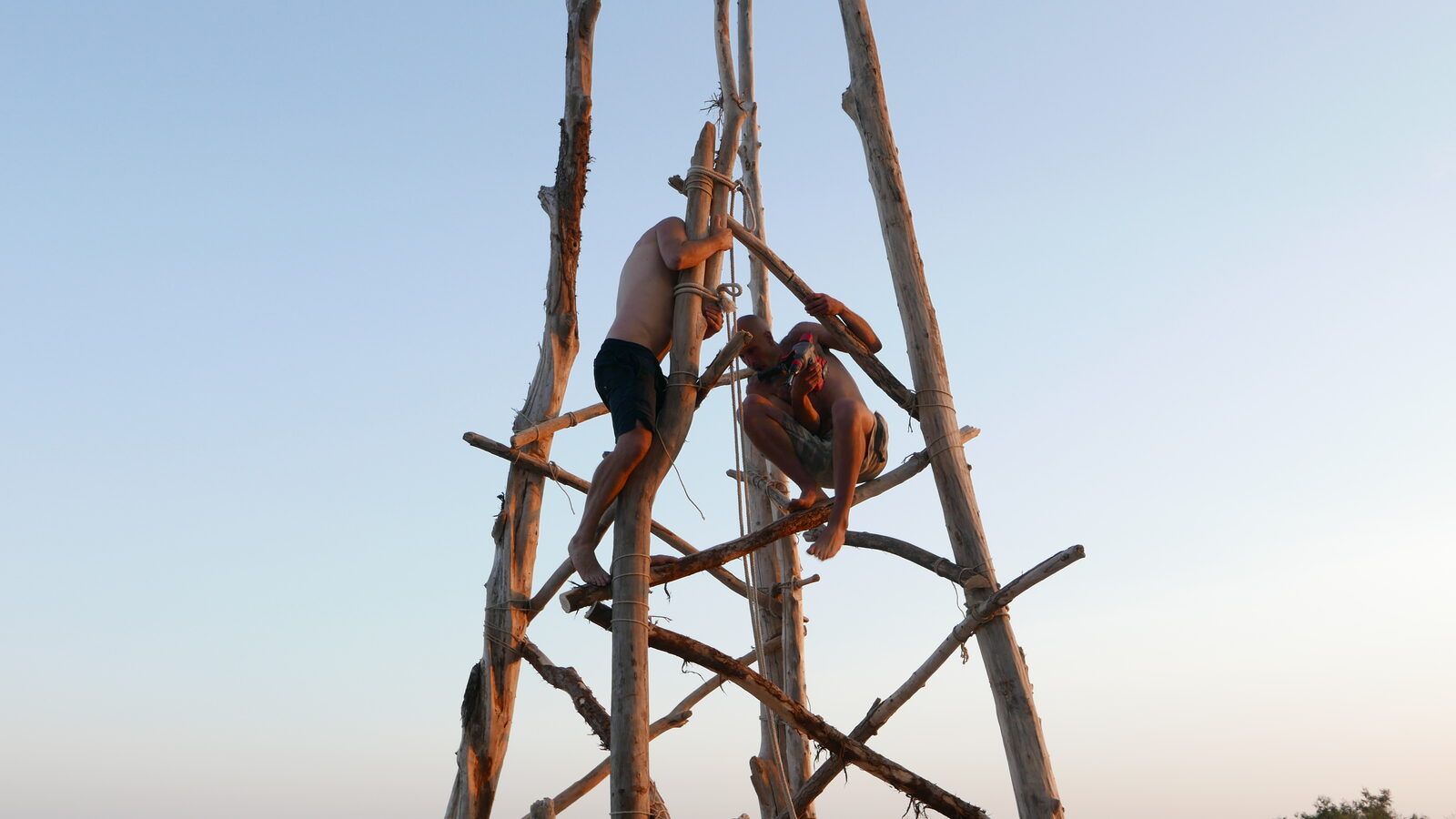
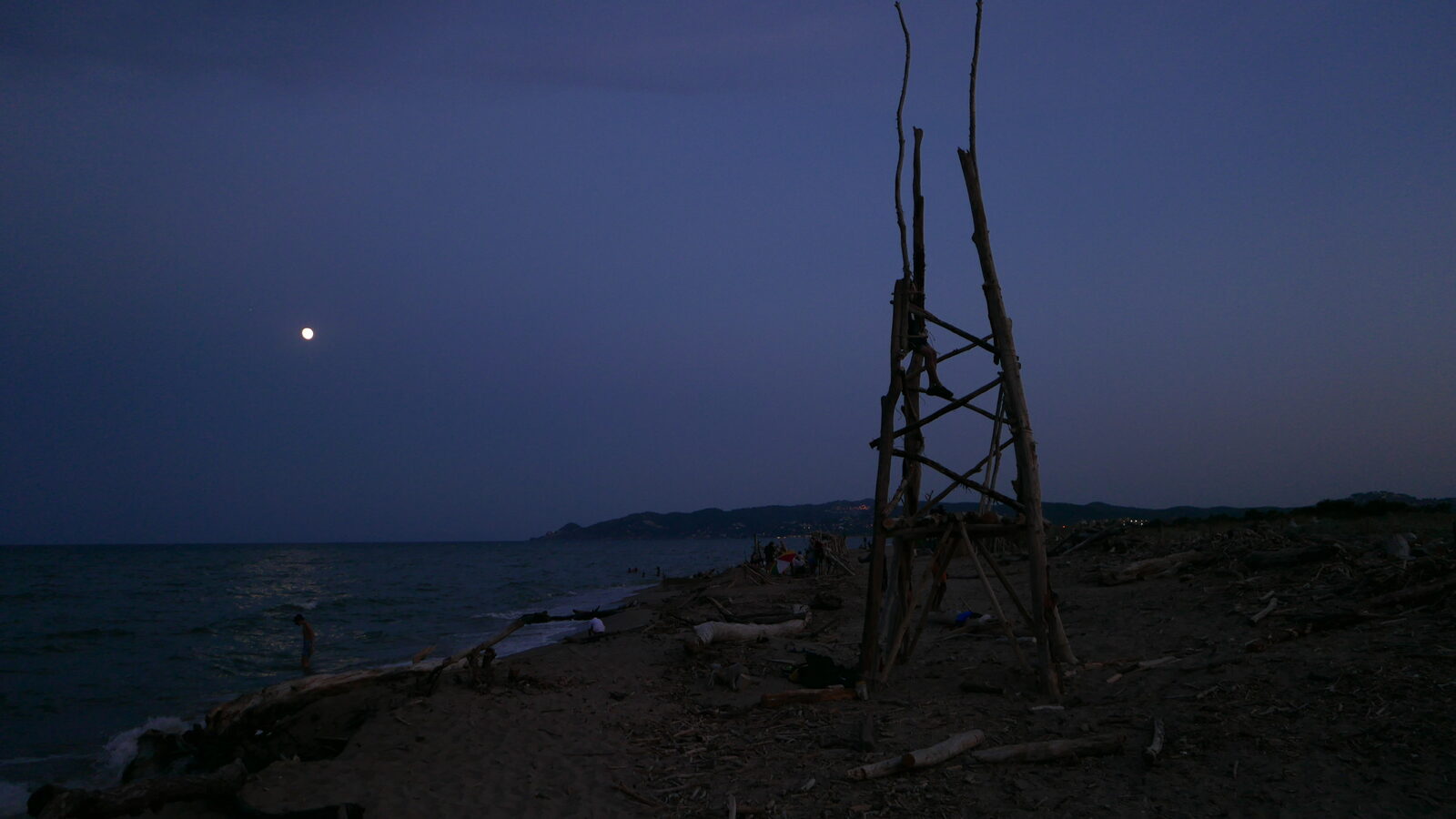
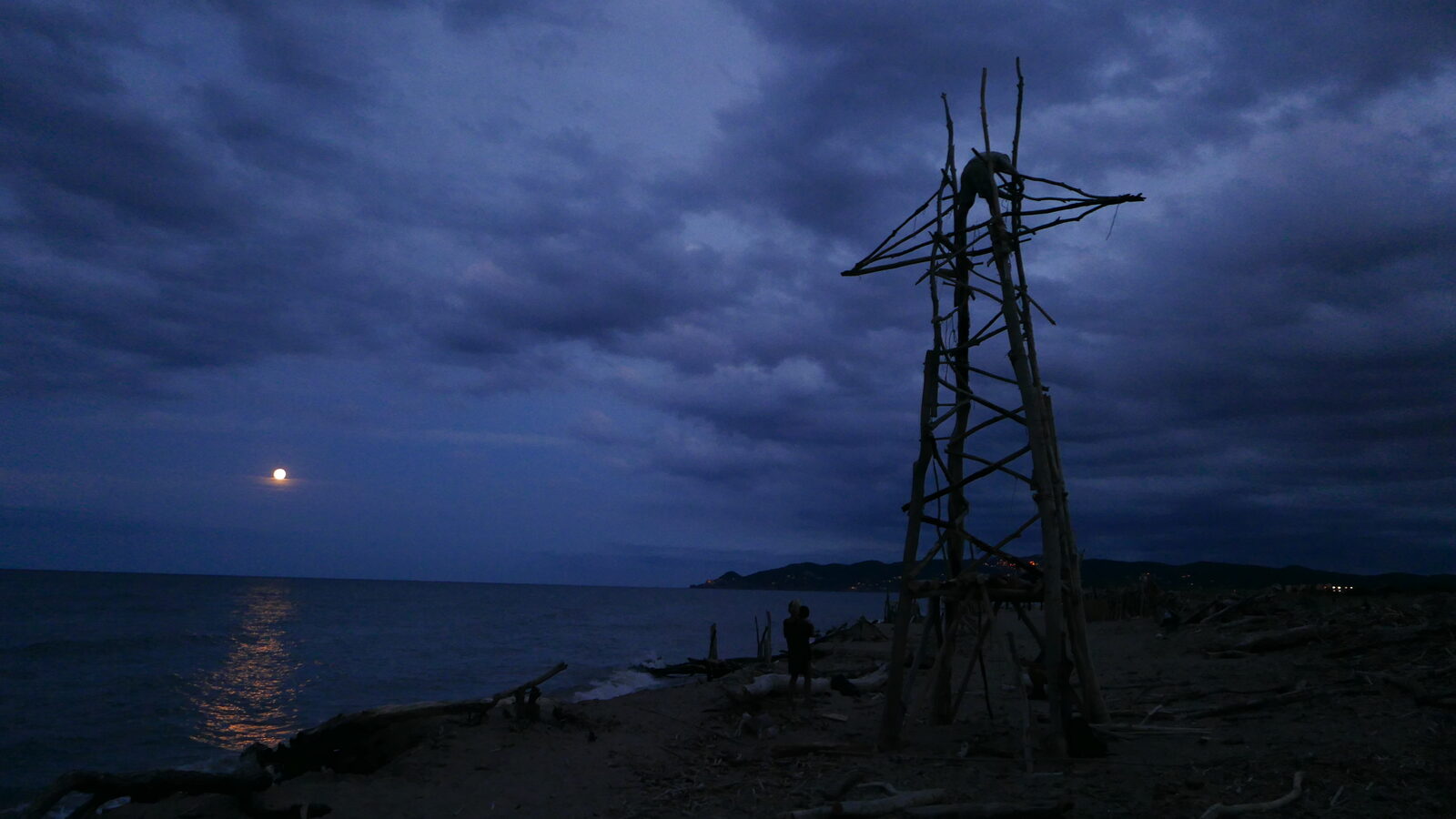
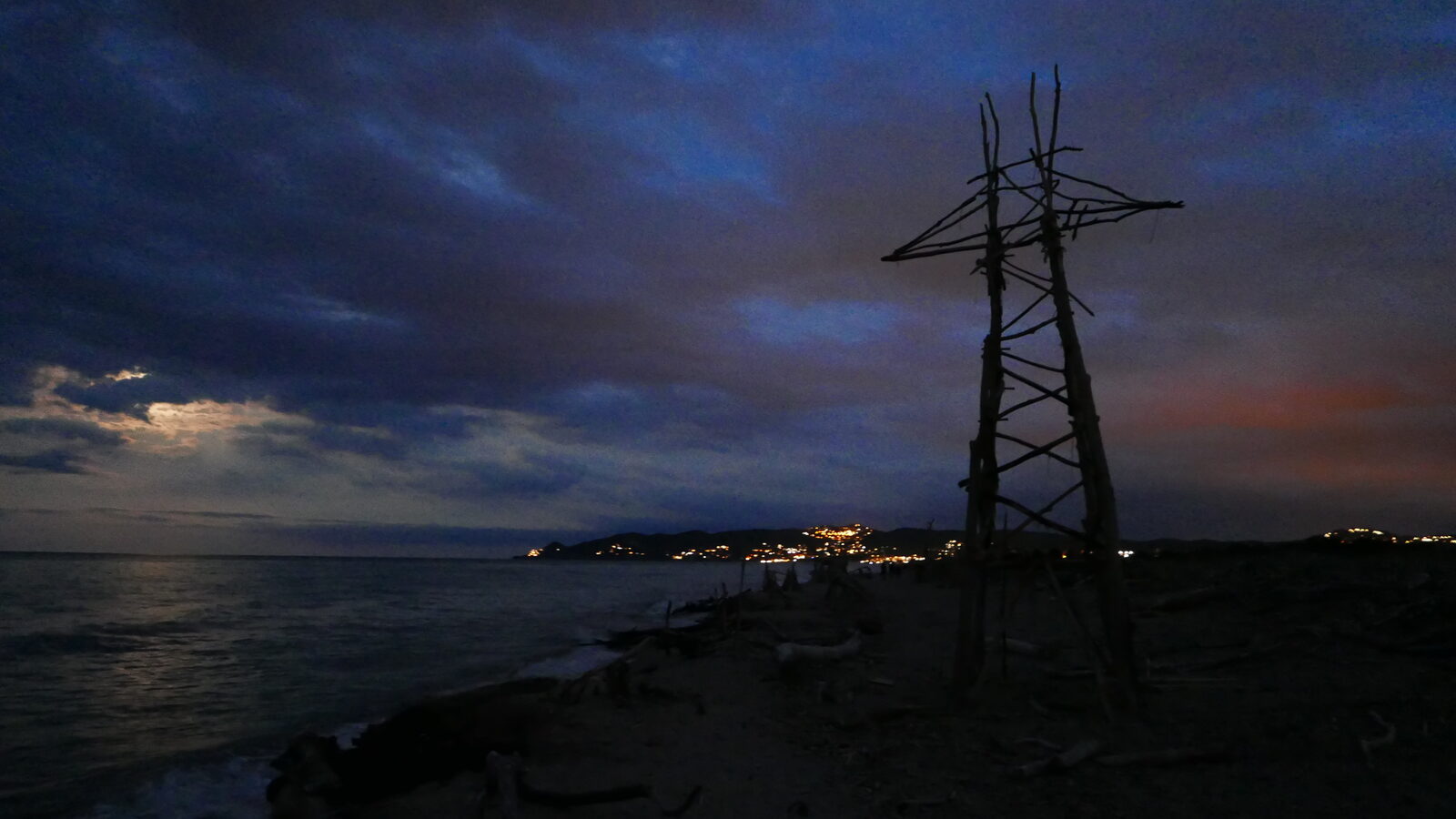
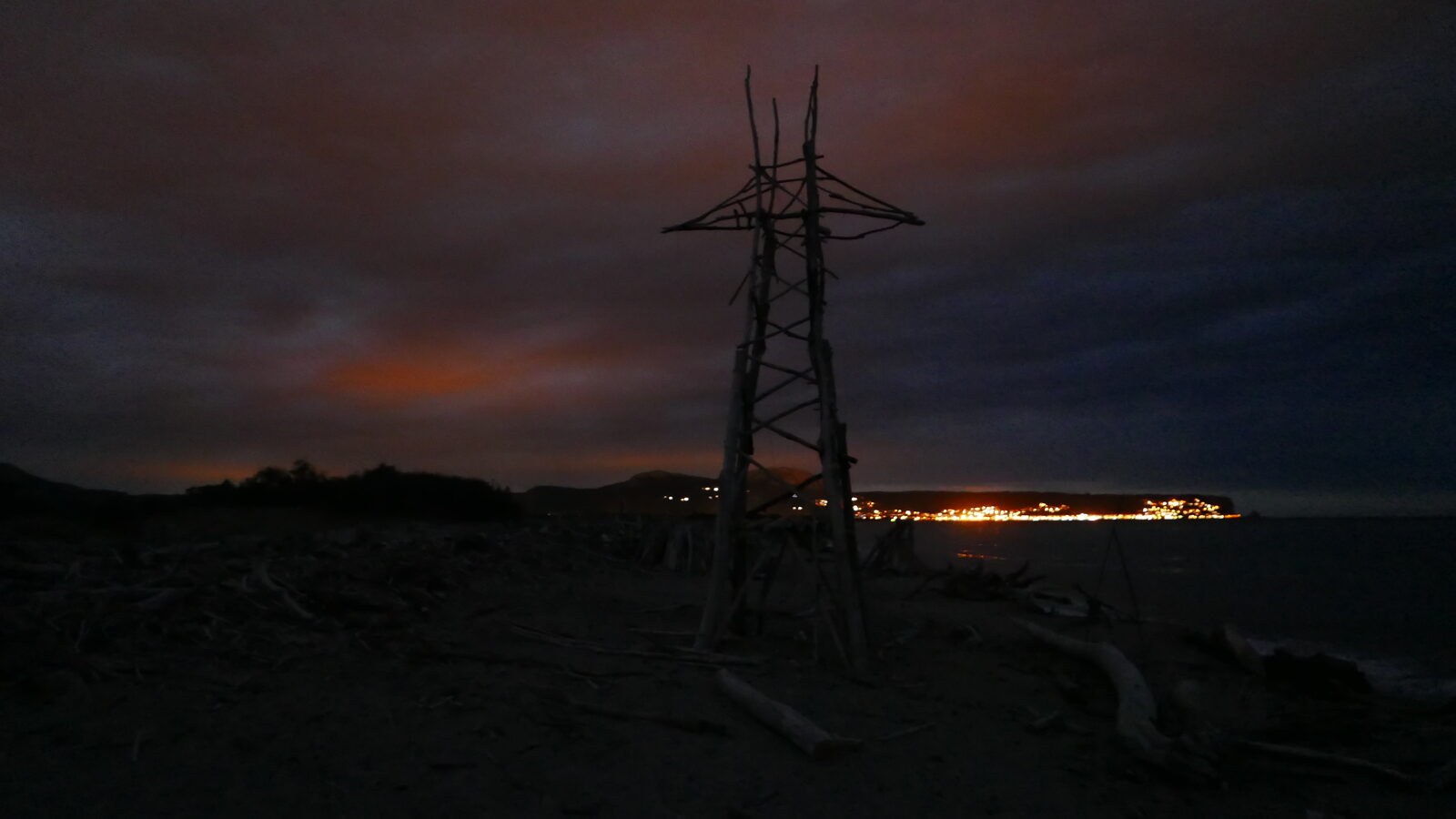
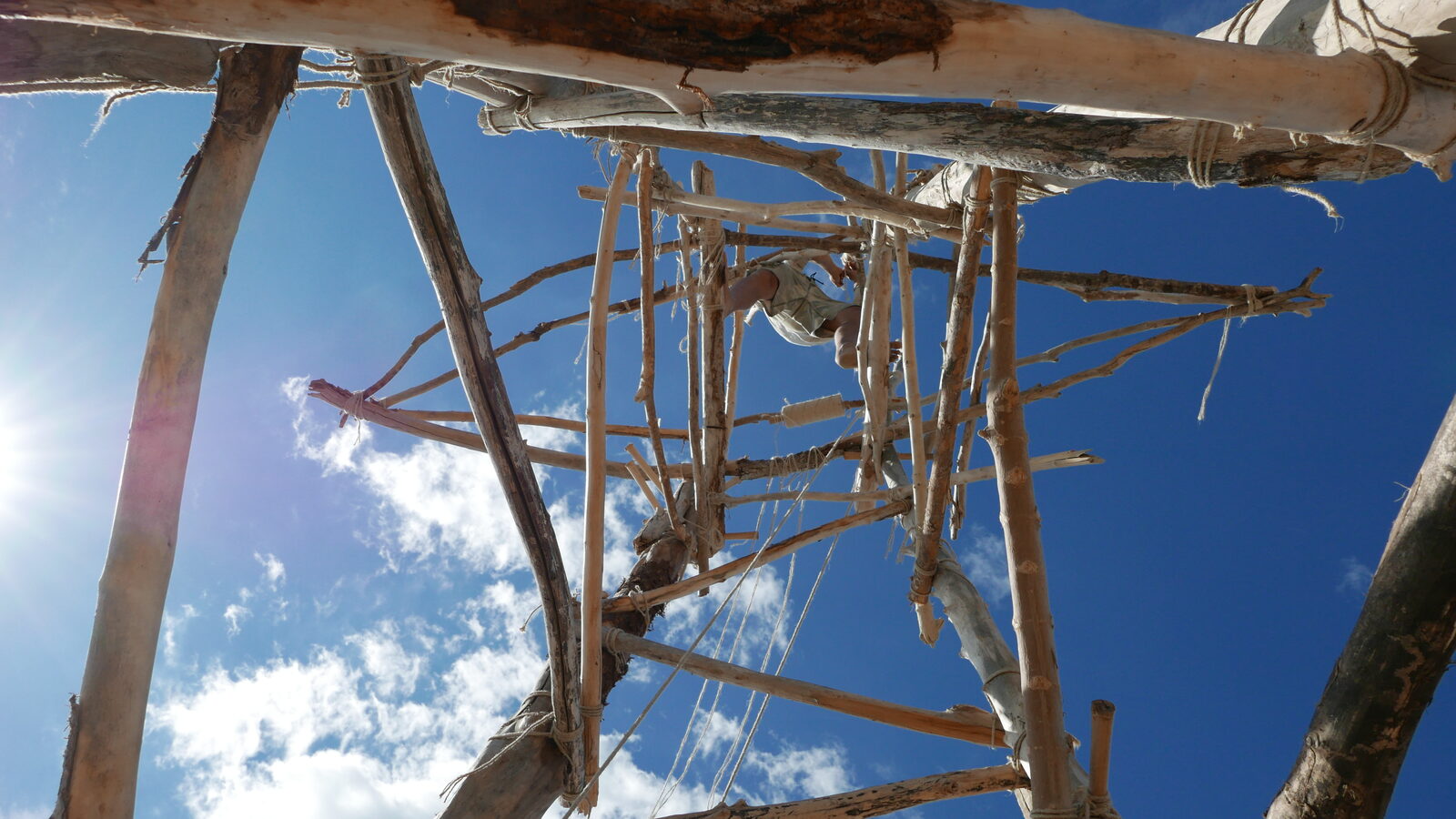
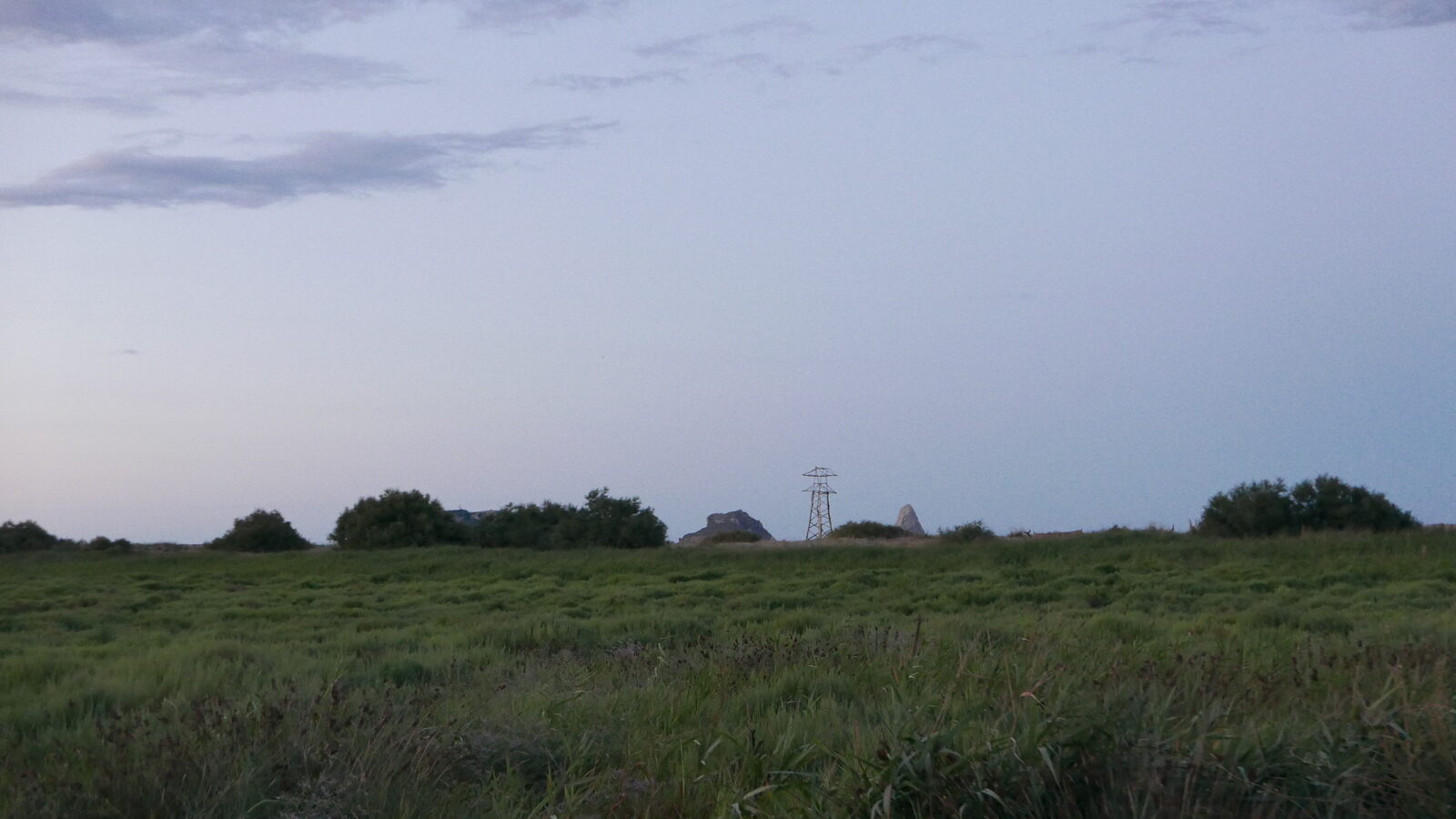
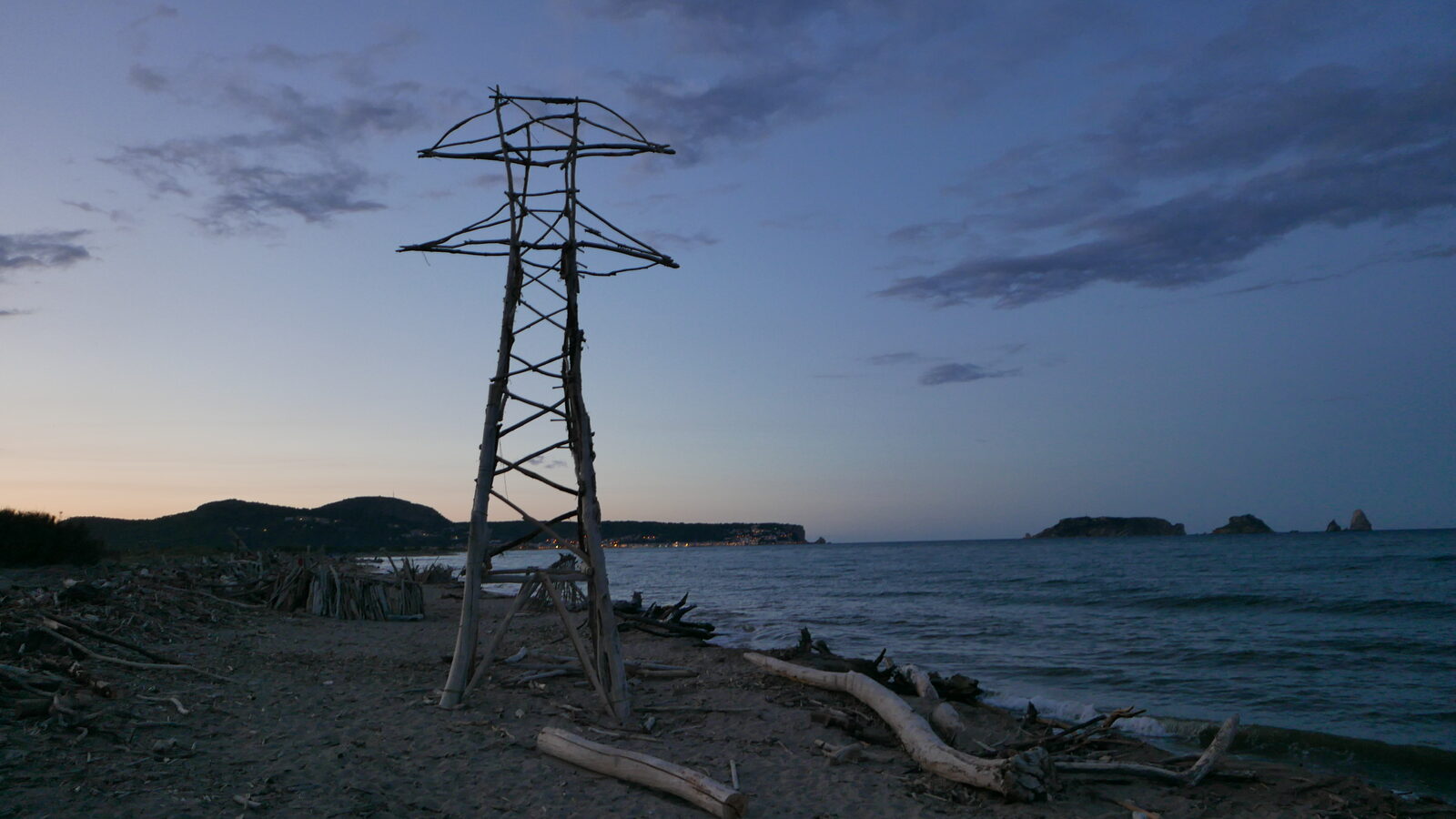
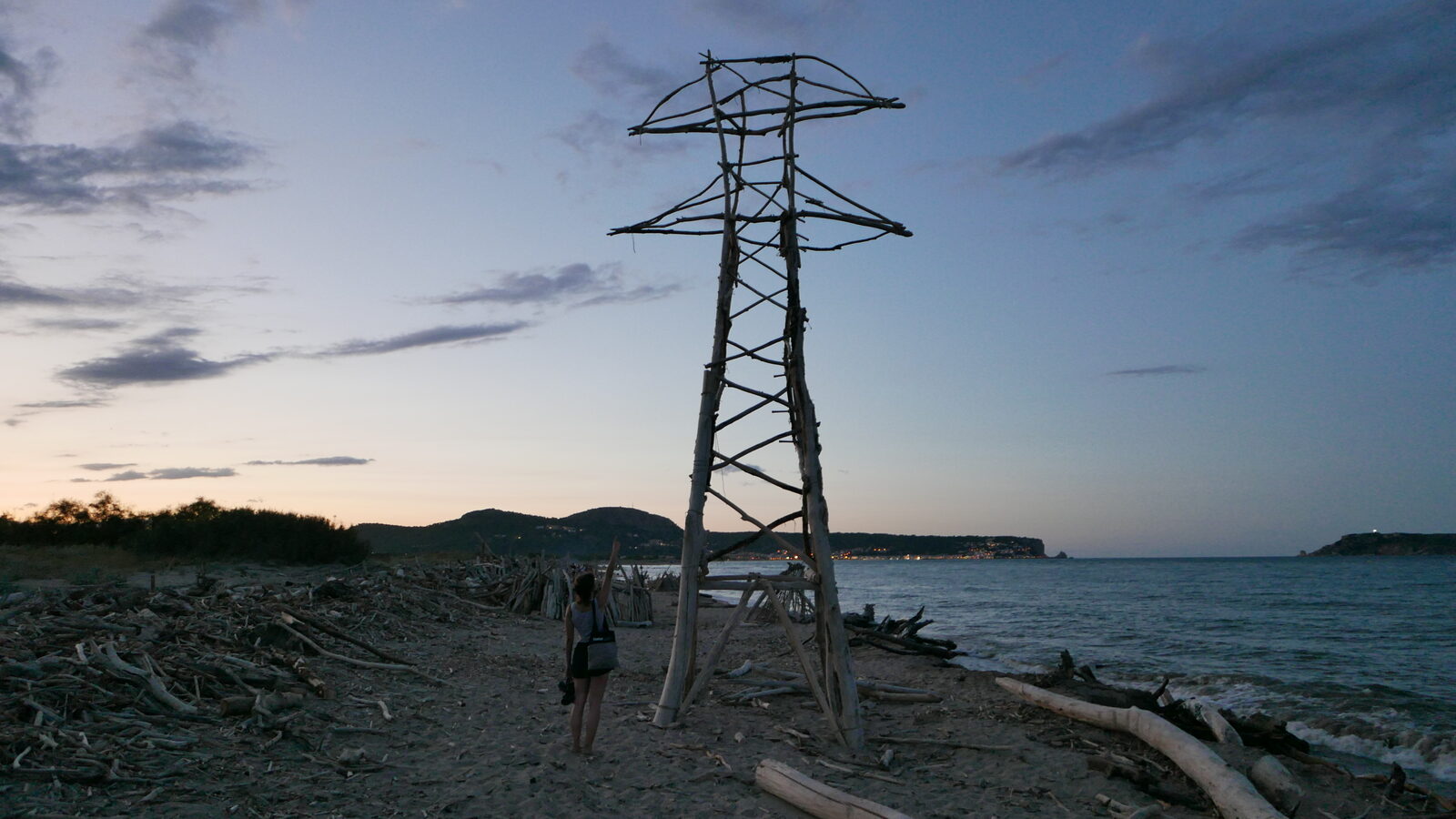
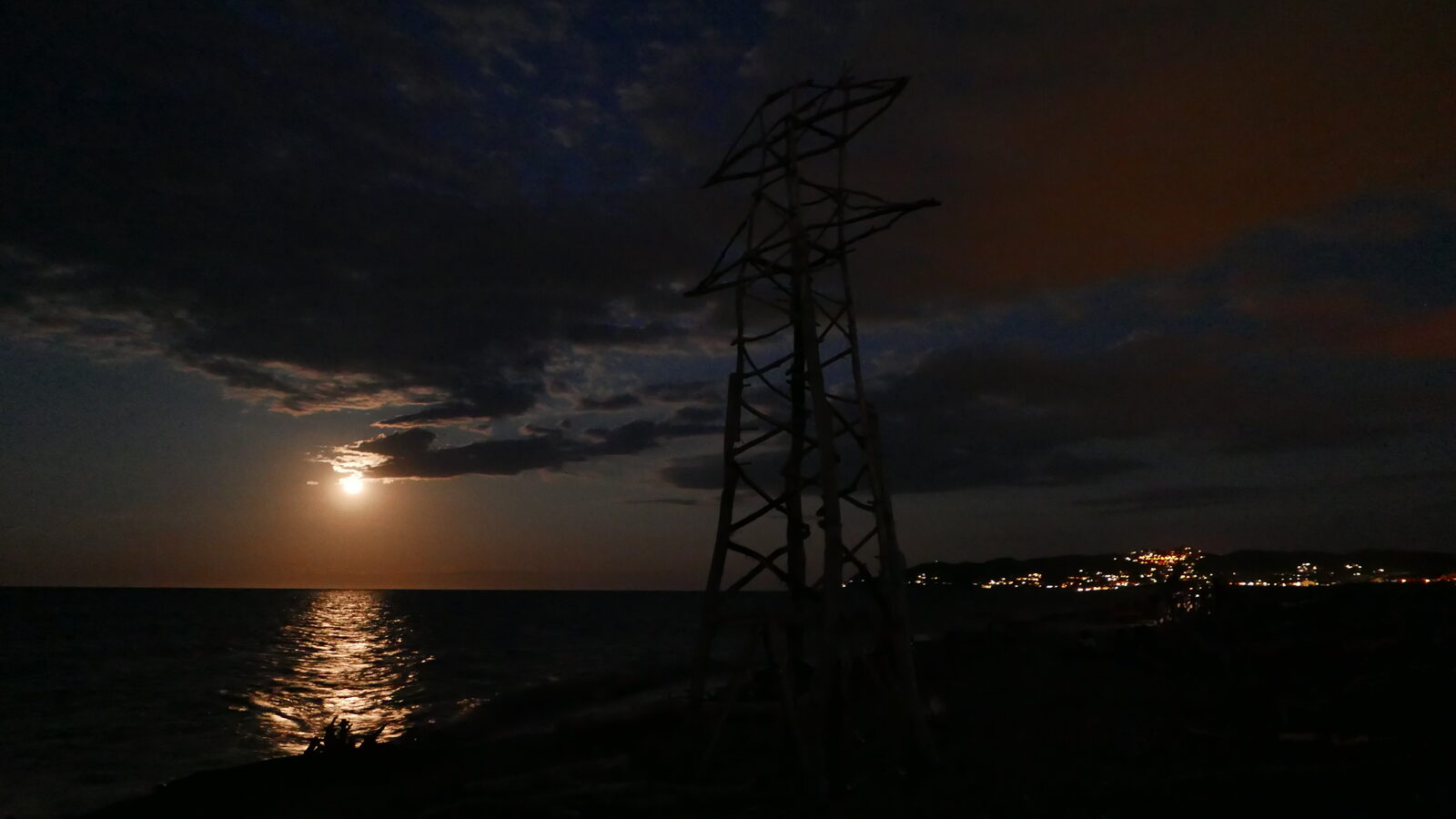
Power Tower I was raised on the beach of Pals, on a shore transformed by catastrophe. After a violent storm the reservoir dams upstream were forced to open their floodgates in a state of emergency — a manoeuvre the dams exploit to generate electricity, lucrative for their owners yet ruinous for the river that carries the discharge down to the sea. The surge swept away trees and animals and left the beach, at the river's mouth, buried under driftwood as never seen before. Along several kilometres of shore, people began to build huts from the stranded trunks.
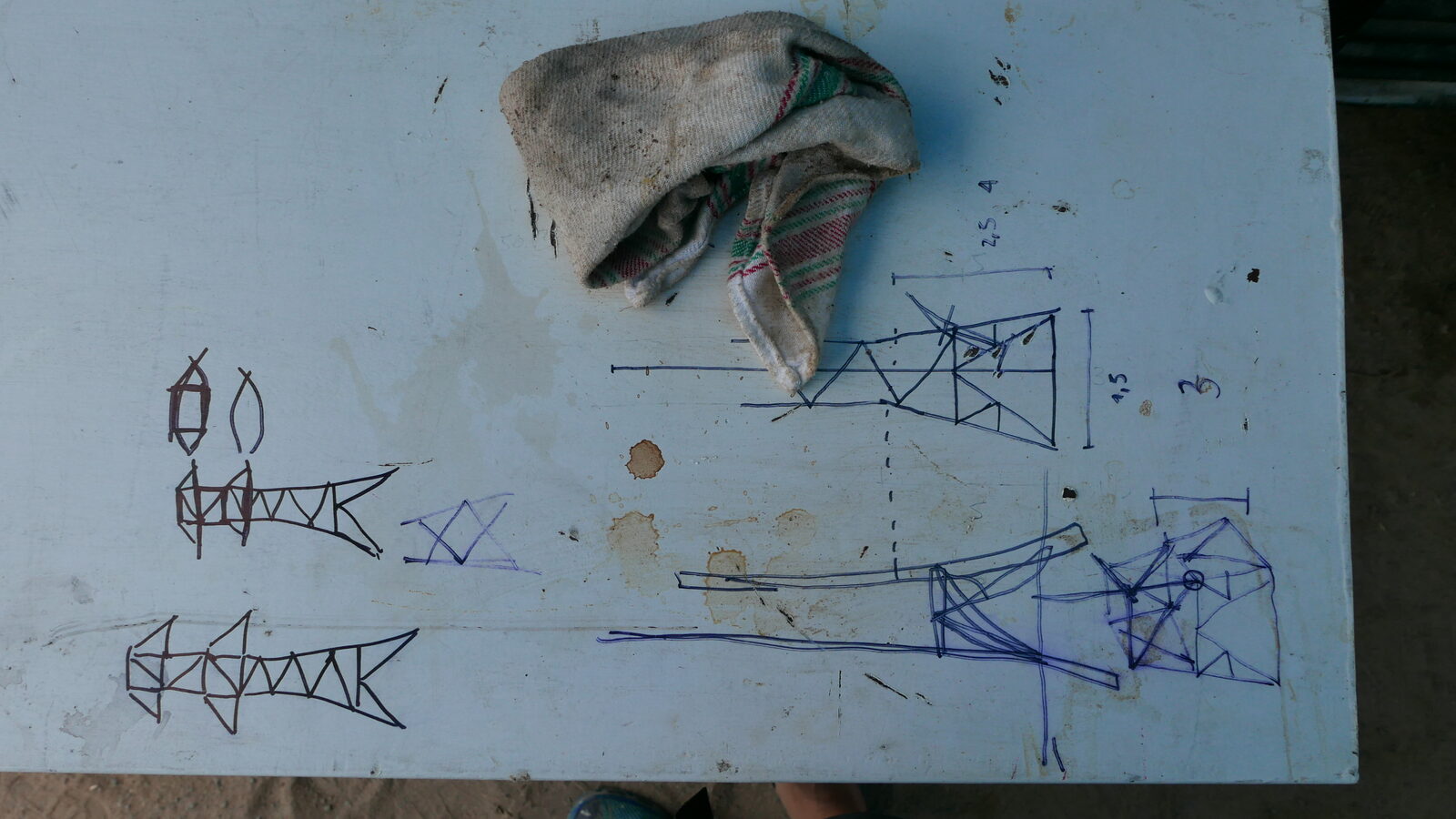
From that same material we raised a giant structure some twelve metres high — a way of mirroring the human being's own invasion of the natural landscape. Modelled on an electricity pylon, the Power Tower stands for the energy infrastructure that sustains civilisation: a contemporary totem, primitive in appearance yet embodying the technological progress we venerate, and a reminder of our voluntary submission to these vast structures. Built from what the river destroyed and left behind, it is left in place to weather and decay.
Habitat · 2025
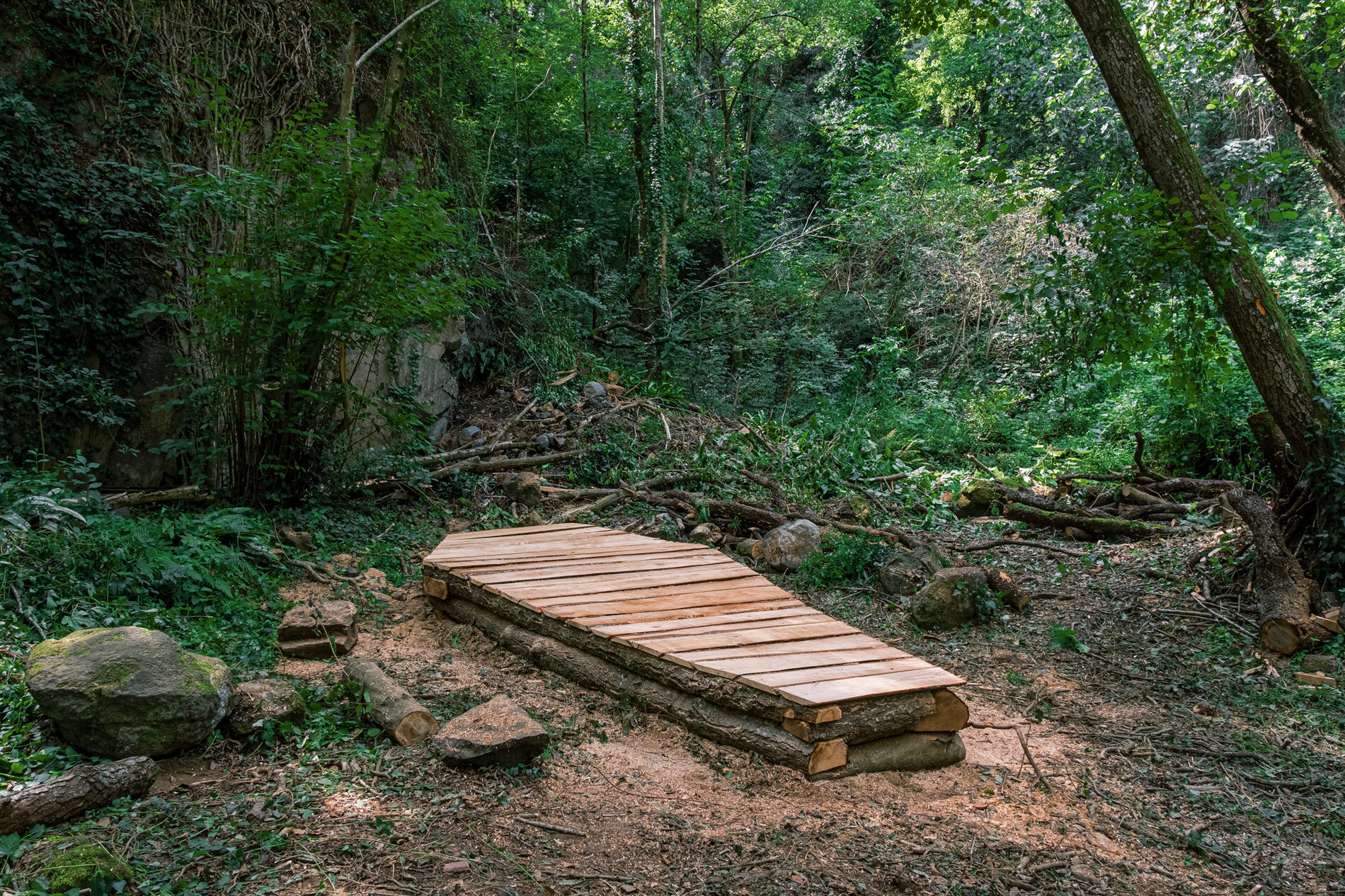
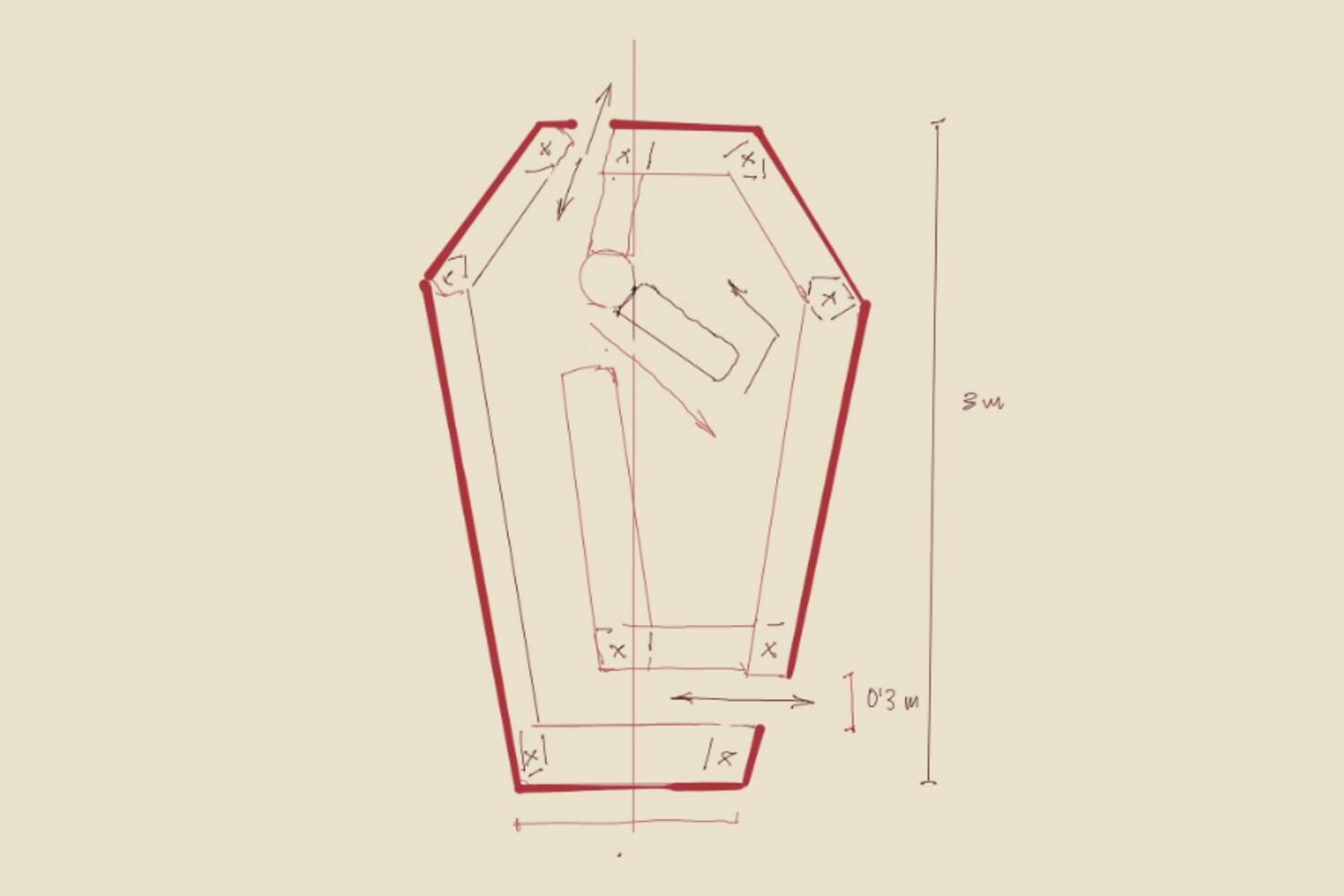
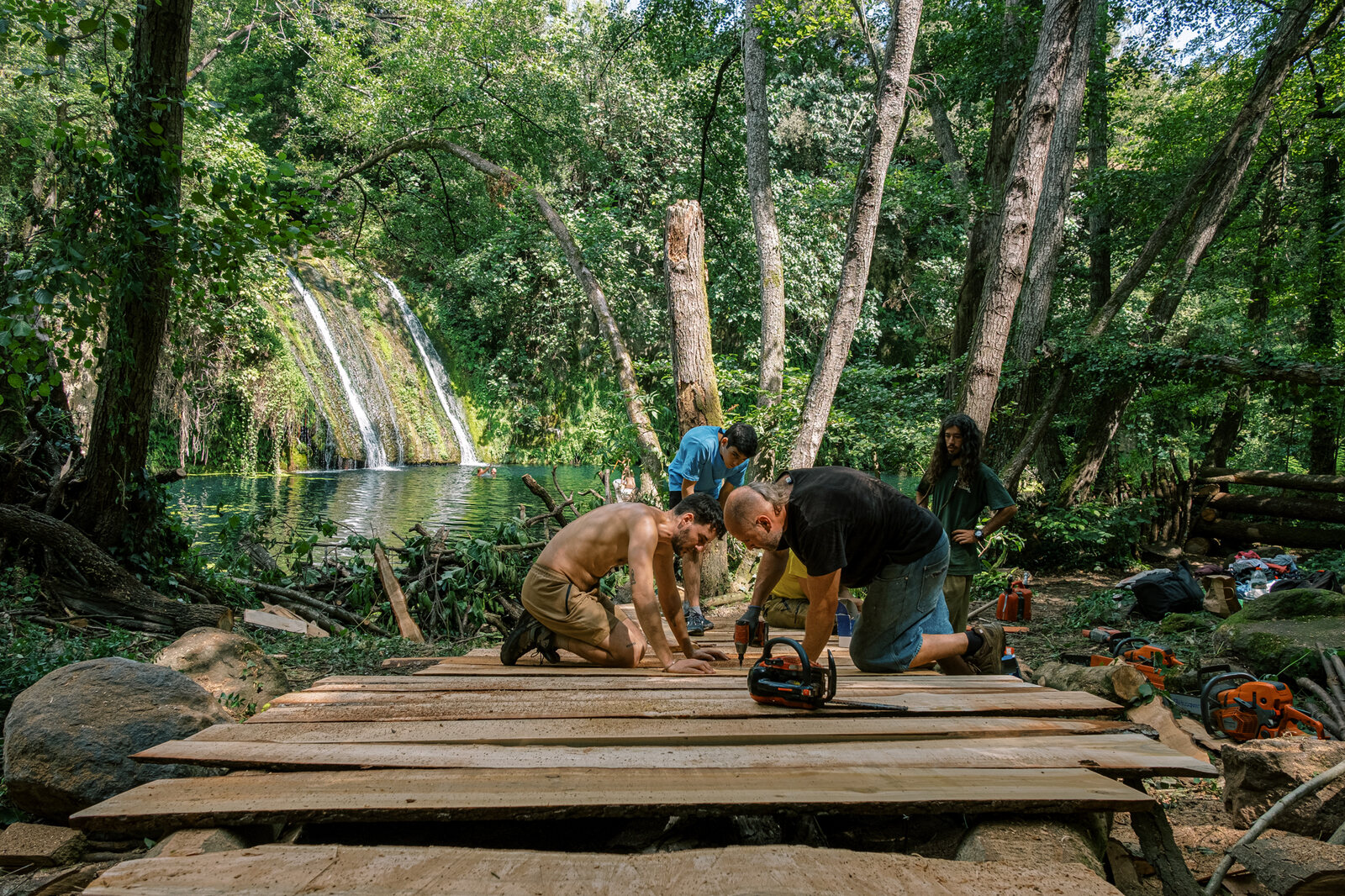
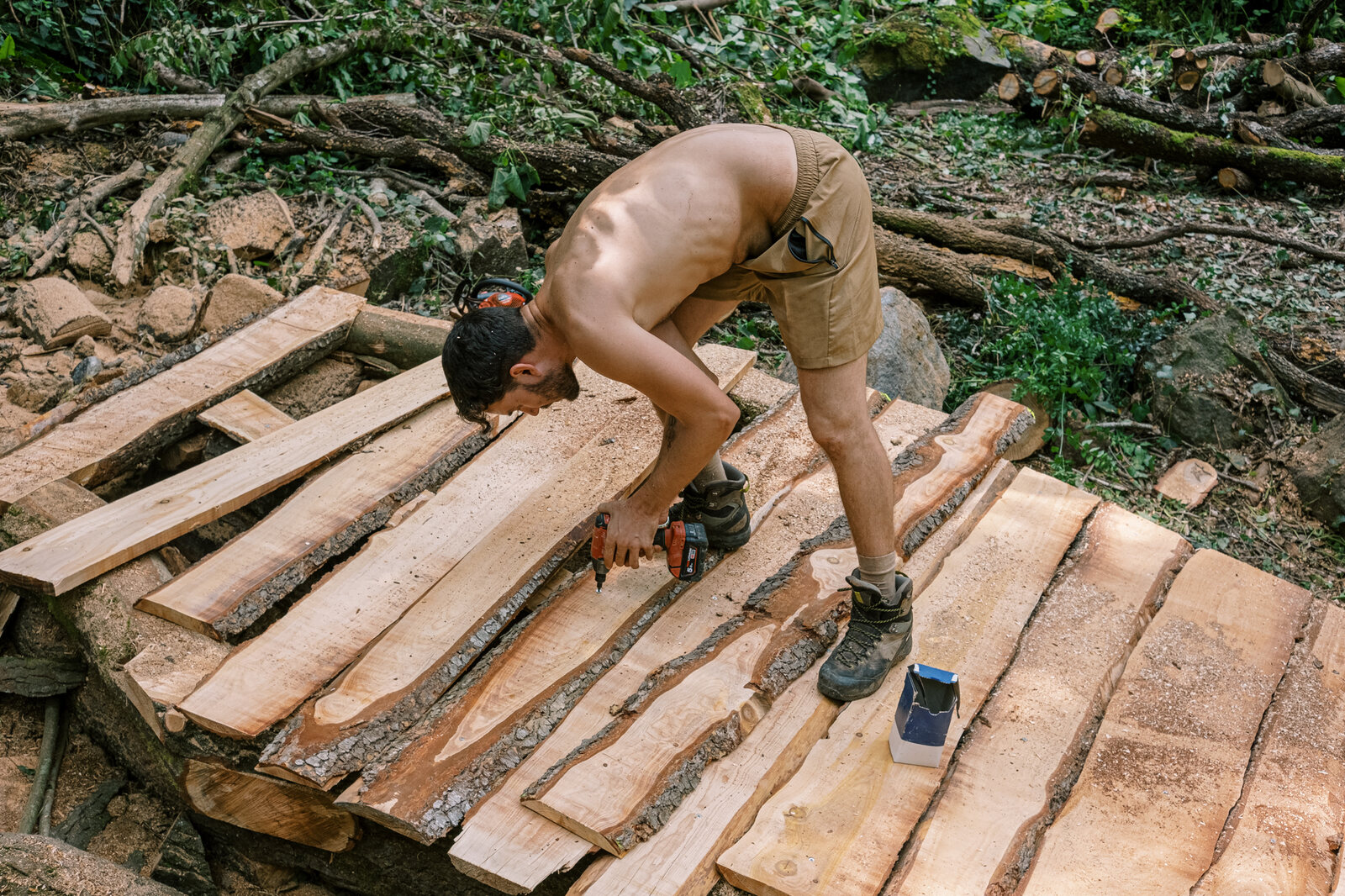
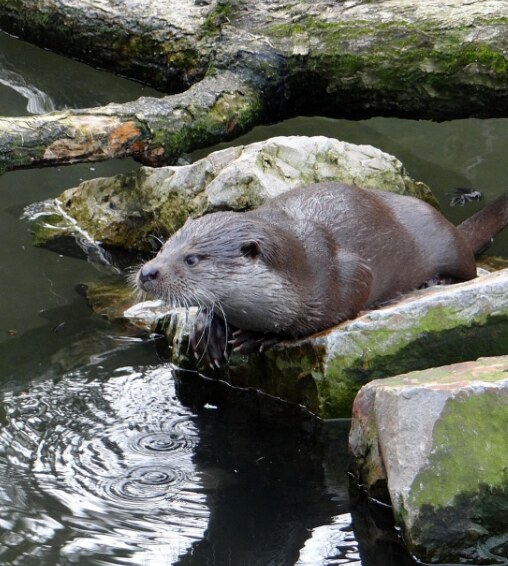
The most recent piece began as a project for the recovery and protection of a natural space — a landscape of rare beauty now under growing pressure from tourism. There we built a refuge for otters, its form following a specific design studied with the environmental department: a receptacle with precise entrances that make it inhabitable for the species.
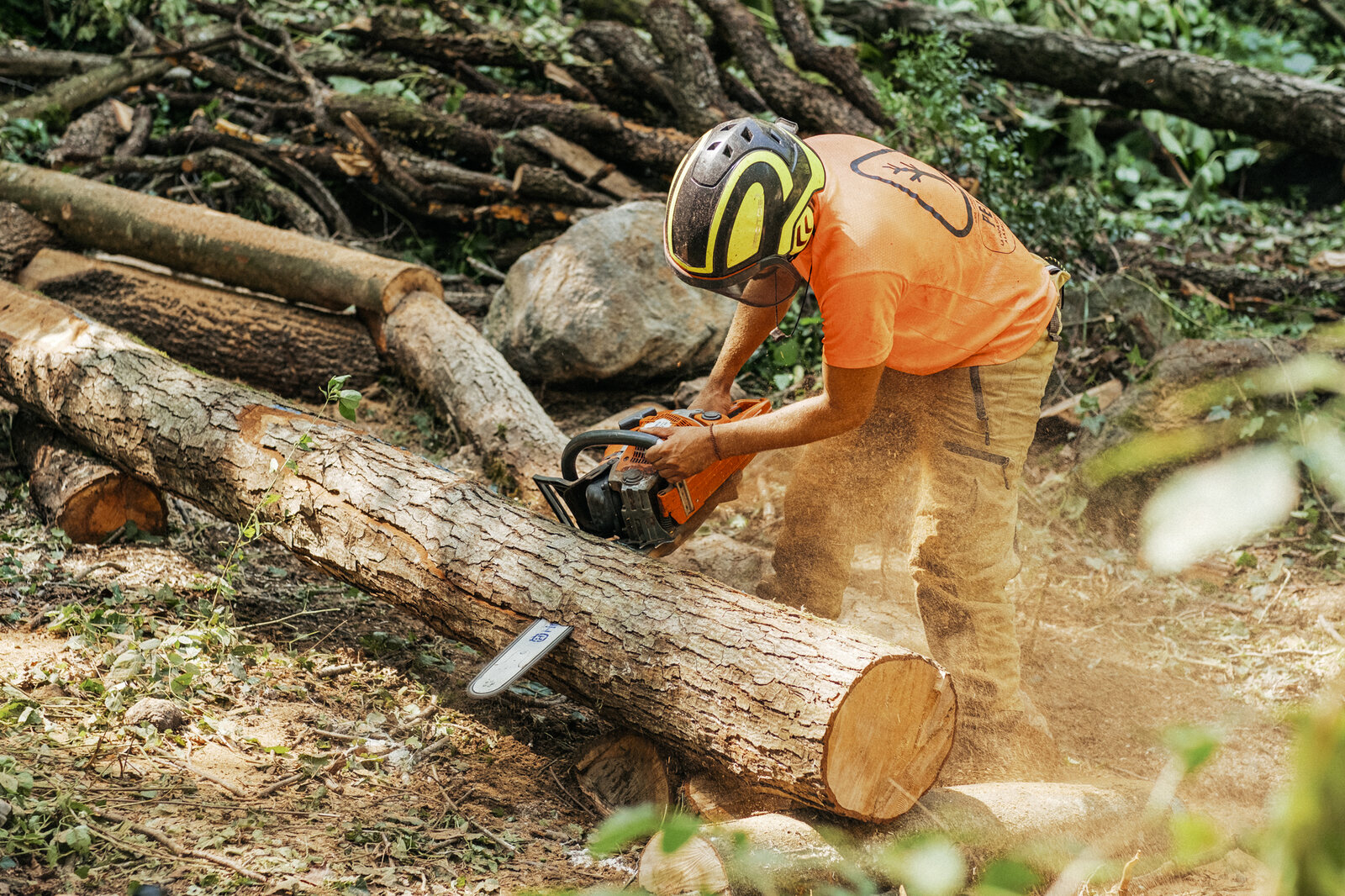
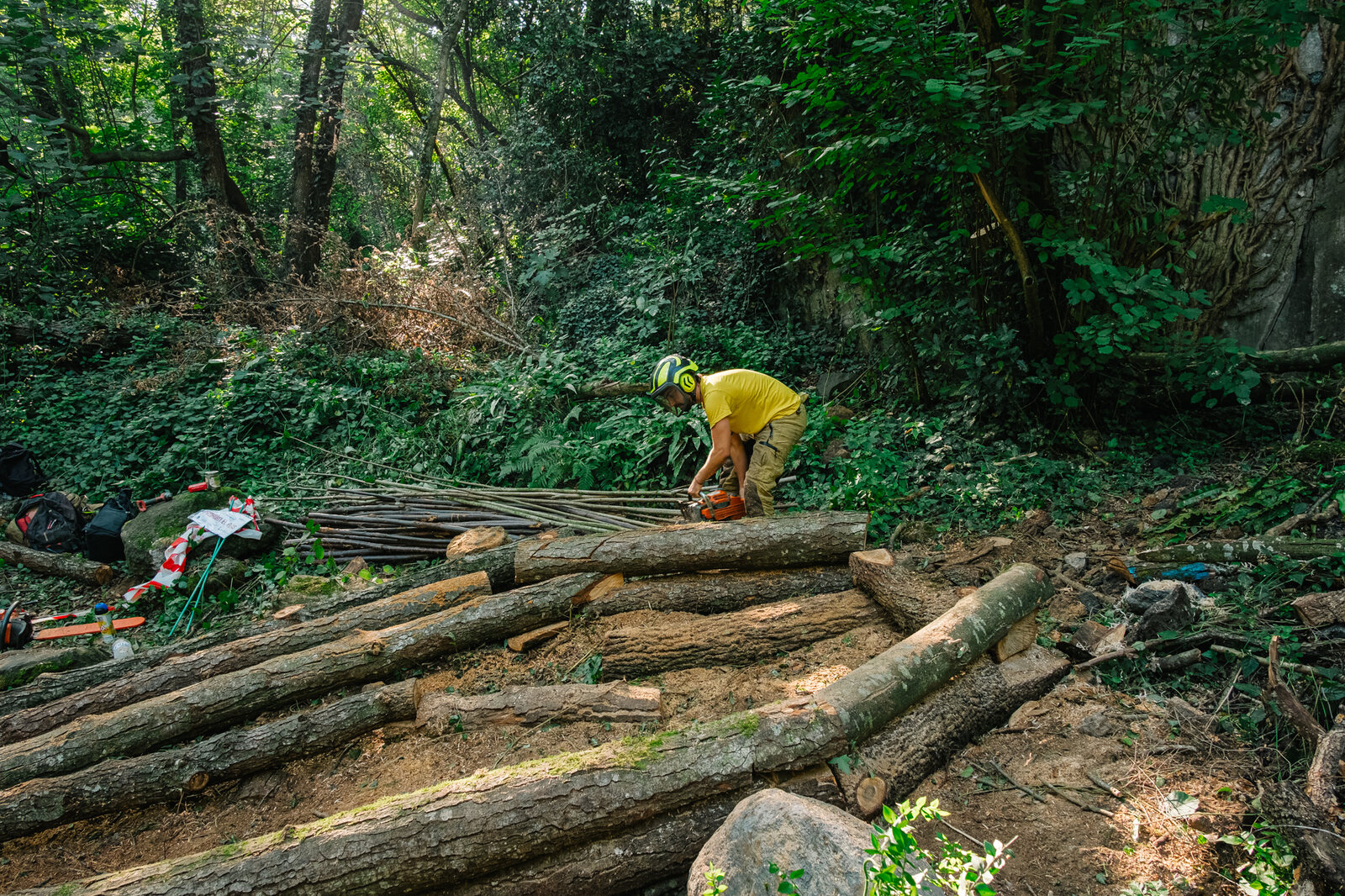
What made it singular is that this prescribed structure could also take the shape of a coffin. The raw material came from trees fallen where part of the terrain had collapsed on its own; gathered on site, they were assembled into the habitat. Home and grave at once, the coffin speaks of human death as a way of ceding space — handing the ground back to the wildlife and the ecosystem, an architecture that emerges from the landscape and is designed to return to it.