Interspecies Archaeology is a sculptural series that explores forms of collaboration between living species through the lens of archaeology — imagining artefacts shaped not only by human intention, but also by biological processes and non-human forms of intelligence.
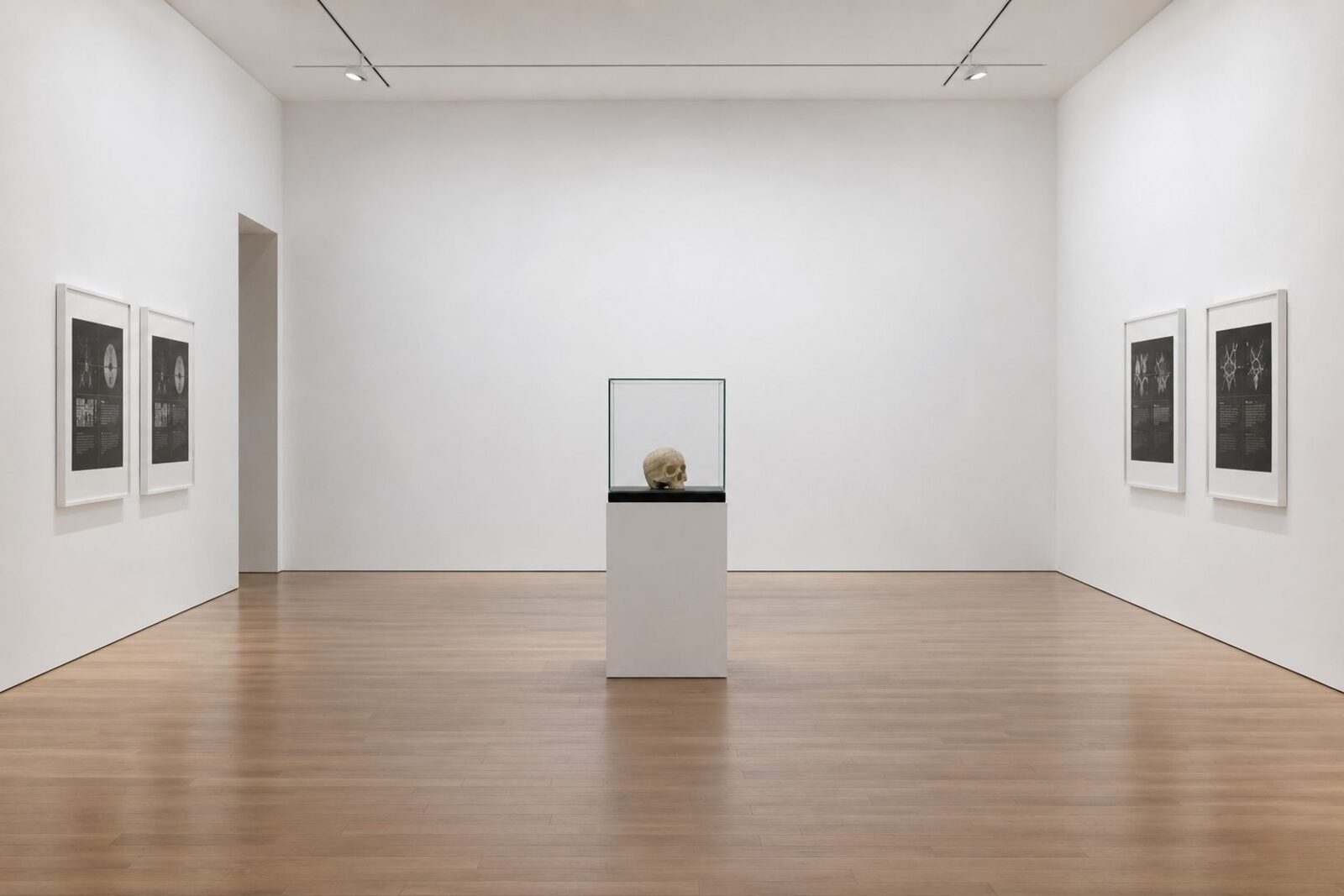
Mycelium as architect
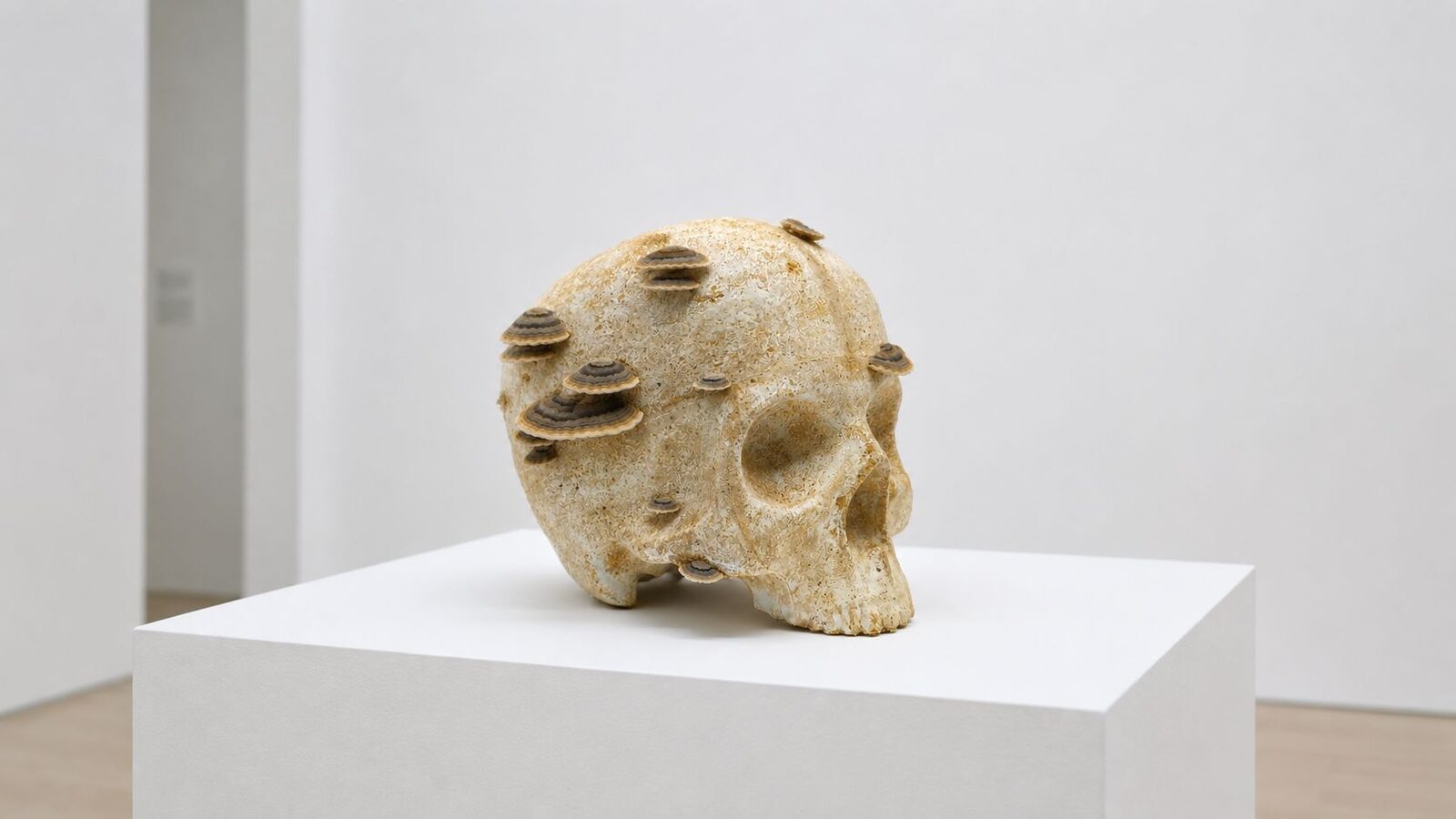
The foundational work of the series focuses on the figure of the human skull, where mycelium — the underground biological network of fungi — assumes the role of architect. The fungal organism gradually reshapes the skull through its own growth, transforming it into a living structure from which mushrooms emerge. The sculpture becomes both relic and habitat: an object suspended between death, regeneration, and co-creation.
Growing the work
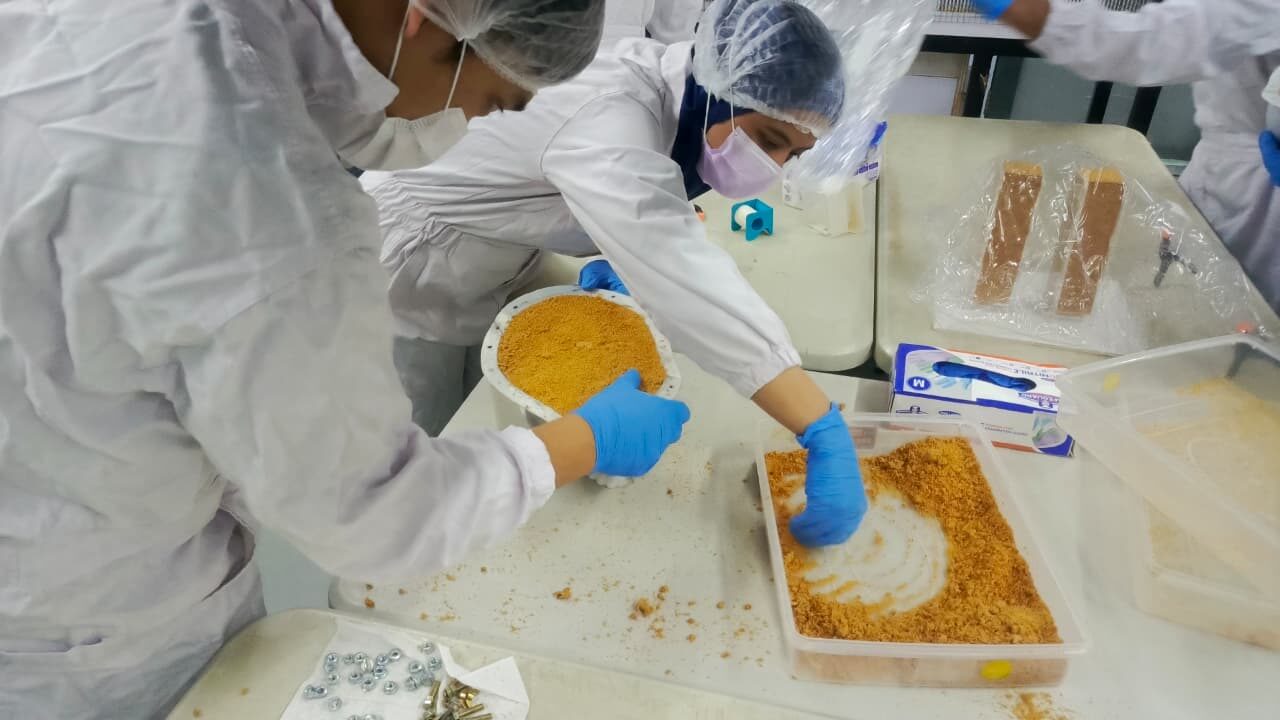
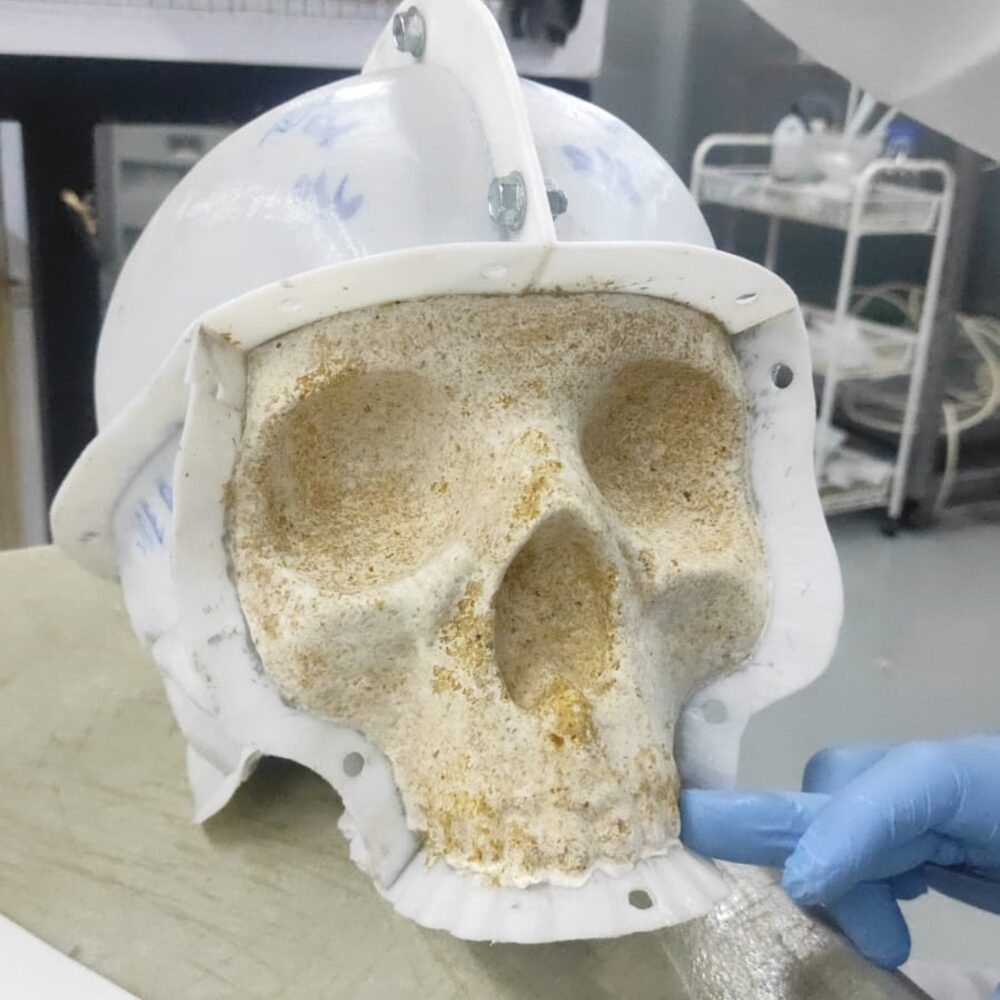
The piece is not carved but cultivated. A mycelium substrate is prepared and inoculated in the laboratory, then packed into a cast of the human skull, where the living network colonises the form and, in time, fruits into bracket fungi.
Archaeology as living process
The work reflects on the ancestral symbiotic relationship between humans and fungi, proposing a vision of archaeology not as the excavation of static remains, but as an active process of transformation in which life continues to inhabit, modify, and reconstruct matter over time. It suggests that the bond between humans and mushrooms is ancient and deeply rooted in the essence of humanity itself — biologically, spiritually, and culturally.
Trametes — time made mineral
The mushroom growing from the sculpture belongs to the Trametes species group (Trametes sp.), a genus of bracket fungi commonly found on dead wood and decomposing trees. These fungi develop thin layered structures that emerge horizontally from surfaces, creating overlapping formations reminiscent of shelves, scales, sedimentary layers, or geological strata.